Industrial Visits
Industrial Visit to HAL Airport
Date: 28 August 2026
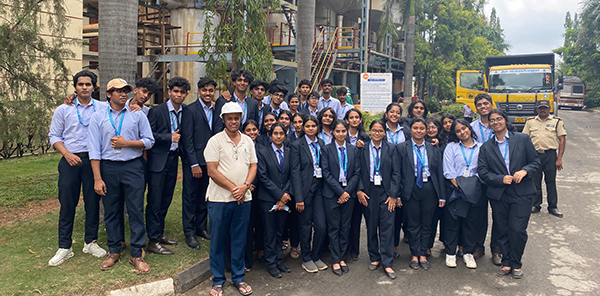
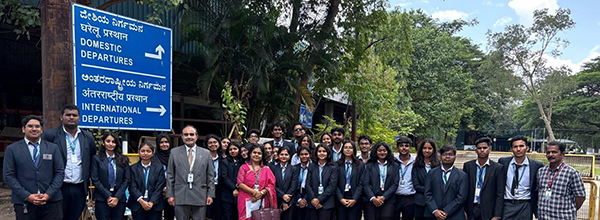
The Department of Professional Management Studies under the School of Business and Management organised Industrial Visit to HAL Airport in association with National Aviation Research Forum (NARF) to familiarize with the operations of Air Traffic Control. The familiarization (FAM) trip was successfully conducted on 28th August 2026 (Friday) for the students of final year BBA Aviation Management from A and B section. A total of 30 students participated in the field visit.
The industrial visit was valuable practical exposure to air traffic control operations, runway handling procedures, aerodrome operations, and airport management.
It was an enriching experience connecting classroom learning with real-world aviation operations.
Industrial visit
Date: 13 February 2026
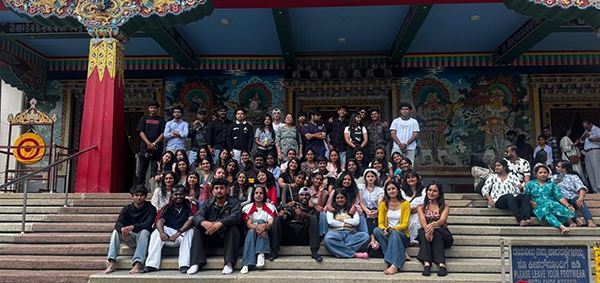
On 13 February 2026, an industrial visit was organized for 67 Aviation Management students from the department of Professional Management Studies, Kristu Jayanti university to Neo Coffee Processing Unit and coffee plantation as part of experiential learning beyond the classroom. The visit was planned to help students understand industrial operations, processing methods, and the practical aspects of plantation-based business activities. At the Neo Coffee Processing Unit, the students observed how raw coffee beans are received, cleaned, graded, processed, and prepared for further distribution.
The officials explained the different stages involved in coffee processing and highlighted the importance of quality control, hygiene, and efficient workflow in production activities.
During the plantation visit, the students gained direct exposure to coffee cultivation practices, plantation management, and the environmental conditions required for healthy crop growth.
The visit helped the students connect theoretical knowledge with real industrial practices and broadened their understanding of agricultural and processing industries.
It also gave them insight into workforce coordination, resource utilization, and day-to-day operational management in a coffee-based enterprise.
Such industrial visits are widely valued because they bridge classroom learning with practical observation and industry exposure. The interaction with industry personnel enabled the students to ask questions and learn about the challenges and opportunities involved in coffee production and processing.
The visit was informative, engaging, and beneficial in improving the students’ practical knowledge and managerial outlook. After completing the industrial visit, the group proceeded to explore the Golden Temple at Bylakuppe, which is a well-known tourist and spiritual destination in the Coorg region.
Industrial visit
Date: 17 March 2026
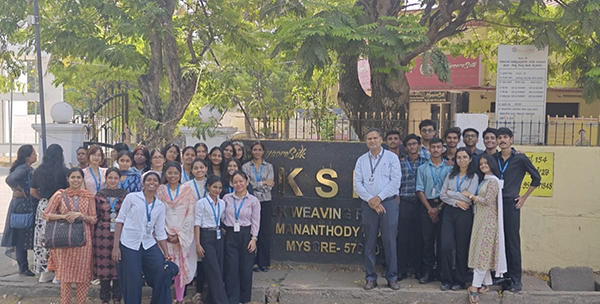
The Department of Professional Management Studies organised an industrial visit to Karnataka Silk Industries Corporation Limited, Mysore, on March 17, 2026, for Aviation Management students. The visit provided practical exposure to silk production, quality control, and systematic workflows. Students observed operations, supply chain coordination, and organizational discipline, linking them to aviation contexts like airport and airline management. They also learned the importance of brand positioning, customer experience, and service quality. The visit highlighted how management principles apply across industries, enhancing students’ understanding of process efficiency, resource management, and premium brand building through experiential learning.
Industrial Visit for III BBA THM
Date: 30 October 2025
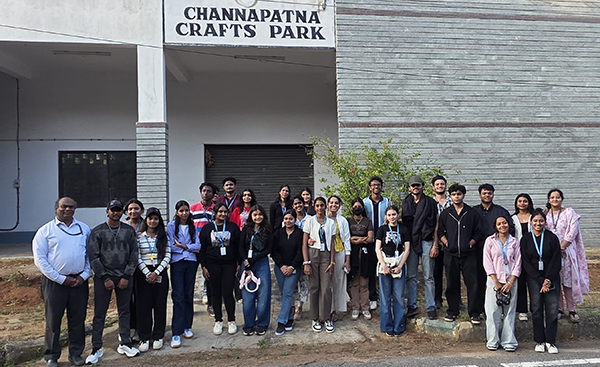
In educational trip was organized to explore the cultural, natural, and artistic heritage of Karnataka. The main destinations were Dodda Alada Mara (Big Banyan Tree), Ramadevarabetta, Bharath Art and Craft in Channapatna, and Janapada Loka. The visit aimed to provide students with firsthand experience of Karnataka’s ecological and cultural richness.
Dodda Alada Mara (Big Banyan Tree)Our first stop was the famous Dodda Alada Mara, located near Kethohalli village, about 28 km from Bengaluru. RamadevarabettaNext, we visited Ramadevarabetta, a rocky hill near Ramanagara. It is known for its scenic beauty, temples, and wildlife. The hill is also a vulture sanctuary, making it an important site for environmental conservation.
Bharath Art and Craft, ChannapatnaOur third stop was Bharath Art and Craft, a center dedicated to the traditional Channapatna toy industry. Students observed the process of making wooden toys using ivory wood (ale mara) and natural colors.
Artisans explained how eco-friendly techniques are used to create beautiful and safe toys. The visit helped students understand the value of preserving traditional crafts and supporting local artisans. Janapada LokaThe final destination was Janapada Loka, a folk museum located near Ramanagara. It showcases the folk culture, traditions, and art forms of Karnataka. Students explored various sections displaying traditional tools, costumes, musical instruments, and rural artifacts.
Industrial visit to Karnataka Silk Industries Corporation Limited (KSIC), Mysore
Date: 15 October 2025
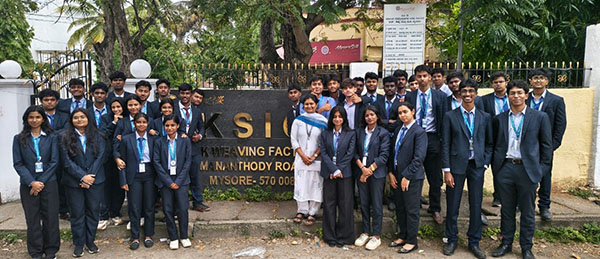
The Department of Professional Management Studies, School of Business and Management, organized an industrial visit to the Karnataka Silk Industries Corporation Limited (KSIC) factory in Mysore on October 15, 2025. The visit, supervised by Dr Ashy Sebastian, aimed to provide students with practical exposure to the entire value chain of a premium, heritage retail brand, from manufacturing efficiency to sophisticated market positioning.During the visit, students observed the integrated process of silk production, which is crucial for understanding the Mysore Silk product’s premium retail value. Students learned that KSIC is the sole proprietor of the 'Mysore Silk' brand, which has earned a Geographical Indication (GI) tag. This exclusive branding is protected at the retail level by authenticating each saree with a hologram and a unique code number. This demonstrates a clear strategy for combating counterfeiting and assuring customers of the product's premium quality, which includes 100% pure silk and gold Saree.
The factory’s structure commanding the entire gamut of silk production from reeling of cocoons to weaving under one roof showcased vertical integration. This model allows KSIC to exercise meticulous quality control and ensures a stable supply chain, which is vital for managing inventory and consistent product availability across their retail showrooms. The visit highlighted how KSIC leverages its heritage to maintain a premium market positioning. Students gained insight into the brand's direct-to-consumer retail strategy via its network of showrooms and its plan to expand distribution to other states, which is essential for widening market reach while maintaining a controlled, luxury brand experience. Overall, the visit was highly informative, connecting classroom concepts of retail brand management, merchandise quality control, and supply chain logistics with the real-world practices of a world-famous silk manufacturer.
Industrial Visit to NSL Sugars Ltd., Maddur, Mysore – Koppa Plant - II Year BBA. IB
Date: 26 September 2025
The Department of Professional Management Studies under the School of Business and Management, Kristu Jayanti (Deemed to be University), organized an Industrial Visit to NSL Sugars Ltd., Maddur, Mysore (Koppa Plant) on 26th September 2025 for the II Year BBA IB students. A total of 60 students participated in the visit, which was conducted from 8:00 a.m. to 4:30 p.m. The primary objective of the visit was to provide students with an experiential understanding of how domestic industries integrate into the global business environment through efficient production systems, supply chain management, and export-oriented trade practices.
Upon arrival, the students were cordially received by the officials of NSL Sugars, who provided an insightful orientation about the company’s operations and its position in the international sugar market. The session offered an overview of the company’s vertically integrated production process - from sugarcane procurement and crushing to juice extraction, clarification, crystallisation, and final packaging - highlighting how process optimisation contributes to maintaining global quality standards and international competitiveness. The emphasis throughout the visit was on quality assurance, advanced technology adoption, and sustainable production practices, which have enabled NSL Sugars to align with global environmental and trade compliance norms. Students observed how the plant’s quality management systems and automation technologies enhance productivity and ensure that the company’s exports meet international specifications and certifications.
In addition to production insights, the visit provided a comprehensive understanding of the supply chain and logistics framework that supports NSL Sugars’ domestic distribution and export operations. Students explored the company’s strategies for sourcing raw materials, managing transportation networks, and optimizing inventory to cater to both domestic and overseas markets. Discussions with company representatives shed light on how global factors - such as exchange rate fluctuations, trade policies, and commodity price volatility - influence the firm’s operational and marketing decisions. From an international business perspective, the visit served as a valuable bridge between academic learning and real-world global trade practices. Students gained exposure to topics such as export documentation, foreign market entry strategies, trade finance, and international pricing mechanisms. The highlight of the day was an interactive Q&A session with the General Manager, Mr. Gowrishankar, who elaborated on the challenges and opportunities of competing in the global sugar industry, the impact of international regulations, and the prospects of Indian sugar exports in emerging markets.
Overall, the industrial visit proved to be an enriching and transformative learning experience. It provided students with a first-hand understanding of how Indian enterprises like NSL Sugars operate within a globalized economy, adapt to international standards, and sustain competitiveness in the global value chain. The initiative exemplified Kristu Jayanti University’s commitment to experiential and global business education, equipping students with the practical insights and global perspectives essential for success in today’s interconnected business world.
Industrial Visit to NSL Sugars Ltd., Maddur, Mysore – Koppa Plant - II Year BBA BA. A
Date: 22 September 2025
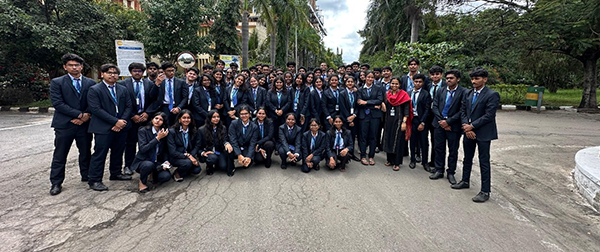
The Department of Professional Management Studies under the School of Business and Management, Kristu Jayanti (Deemed to be University), organised an Industrial Visit to NSL Sugars Ltd., Maddur, Mysore (Koppa Plant) on 22nd September 2025 for the II Year BBA BA ‘A’ students specializing in Business Analytics. A total of 51 students participated in the visit, which took place from 8:00 a.m. to 4:30 p.m. The visit aimed to bridge classroom learning with real-world industrial analytics by exposing students to the application of data-driven decision-making, process optimization, and performance measurement in a large-scale manufacturing environment.
Students were warmly welcomed by the officials of NSL Sugars, who provided a detailed orientation on the company’s operations, emphasizing how data and analytics are integral to improving efficiency, quality, and profitability. The session began with an overview of the sugar production process, covering key stages such as sugarcane procurement, crushing, juice extraction, clarification, crystallisation, and packaging. At each stage, officials explained how operational data—ranging from cane yield and recovery rates to energy consumption and process efficiency—is continuously monitored and analysed to ensure optimal output.
The company’s strong focus on technology-enabled manufacturing and data-based quality control systems gave students insight into how analytics supports operational excellence. Real-time data monitoring tools, IoT-based sensors, and automated process control systems are used to track performance indicators and maintain international quality standards. Through this, students could relate their coursework on data visualization, statistical analysis, and predictive modelling to real-world applications in process management.
From a supply chain analytics perspective, the visit offered an understanding of how NSL Sugars manages logistics, inventory, and distribution through data-based forecasting and optimization techniques. Officials discussed how data analytics helps the company make informed decisions on demand forecasting, procurement planning, and route optimization, thereby minimizing costs and improving responsiveness. Students also learned about how market data, such as commodity price trends, trade statistics, and currency fluctuations, influence strategic decision-making in both domestic and international markets.
The visit also highlighted the use of business intelligence (BI) dashboards and data management systems that enable managers to interpret large volumes of production and market data efficiently. Students were particularly interested in understanding how performance metrics and key performance indicators (KPIs) are designed, tracked, and visualized to enhance decision-making at various organizational levels. A special interactive session with the General Manager, Mr. Gowrishankar, allowed students to explore how analytical tools and techniques support international competitiveness and export strategies. He emphasized how data analytics assists the company in evaluating foreign market opportunities, benchmarking performance, and navigating global trade challenges such as price volatility and regulatory compliance.
Overall, the industrial visit was a highly enriching experience for the students of Business Analytics. It provided a comprehensive understanding of how analytical insights drive efficiency, sustainability, and profitability within the sugar industry. The visit enabled students to connect theoretical concepts—such as data interpretation, performance modelling, and business forecasting—with their practical applications in industrial and global business contexts. The initiative reaffirmed Kristu Jayanti University’s commitment to experiential learning and analytics-driven business education, preparing students to apply data science and analytics to real-world management problems in a globalized economy.
Industrial Visit to NSL Sugars Ltd., Maddur, Mysore – Koppa Plant - II Year BBA. AM A
Date: 12 September 2025
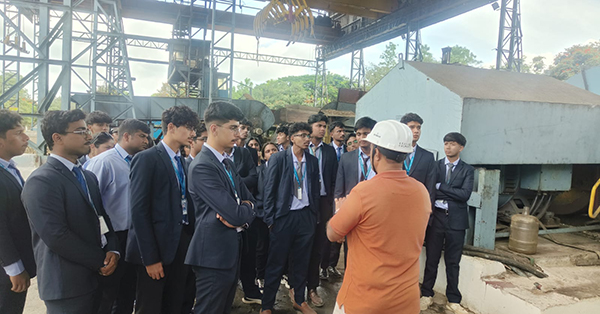
The Department of Professional Management Studies under the School of Business and Management, Kristu Jayanti (Deemed to be University), organized an Industrial Visit to NSL Sugars Ltd., Maddur, Mysore (Koppa Plant) on 12th September 2025 for the II Year BBA AM A students. A total of 55 students participated in the visit, which was conducted from 8:00 a.m. to 4:30 p.m. The main objective of the visit was to provide students with hands-on exposure to large-scale industrial operations and demonstrate the practical application of concepts learned in the classroom. The visit included a detailed walkthrough of the sugar production process, covering sugarcane procurement, crushing, juice extraction, clarification, crystallization, and packaging. The emphasis on quality control, technology-driven production processes, and sustainable practices gave students an understanding of how companies maintain efficiency, productivity, and environmental responsibility in industrial operations.
The visit was particularly valuable for BBA students as it highlighted key areas of management in practice, including operations management, supply chain logistics, inventory planning, and production scheduling. Students gained insights into how organizations manage resources, streamline processes, and ensure smooth coordination across different functions. Observing these operations helped students relate theoretical knowledge from subjects like Principles of Management, Operations Management, and Business Organization to real-world applications.
During the visit, students also had the opportunity to interact with senior officials, including a Q&A session with General Manager Mr. Gowrishankar, where they clarified doubts regarding production strategies, workforce management, and operational challenges. This interaction provided students with valuable perspectives on decision-making, problem-solving, and managerial responsibilities in a large industrial setup. Overall, the industrial visit was an enriching learning experience for BBA students. It provided practical exposure to industrial processes, managerial practices, and organizational operations, helping students understand how classroom concepts are applied in real-world business settings. The initiative reinforced Kristu Jayanti University’s commitment to experiential learning, ensuring that students are better equipped to translate theoretical knowledge into practical skills for their future careers in business and management.
Industrial Visit to NSL Sugars Ltd., Maddur, Mysore – Koppa Plant - II Year BBA. AMB
Date: 10 September 2025
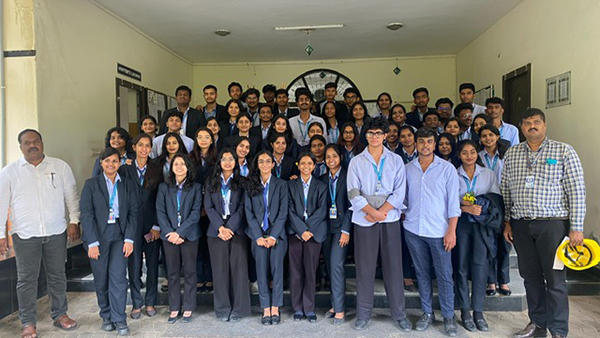
The Department of Professional Management Studies under School of Business and Management, Kristu Jayanti (Deemed to be University) organised an Industrial Visit to NSL Sugars Ltd., Maddur, Mysore (Koppa Plant) on the 10th of September 2025 for the II Year BBA AM B students. A total of 60 students participated in the industrial visit. The visit was conducted from 8:00 am to 4:30 pm with the objective of bridging classroom learning with practical exposure to large-scale industrial operations and global trade practices. The students were warmly welcomed by the officials of NSL Sugars, who provided a detailed orientation on the working of the plant. They were taken through various stages of sugar production, including sugarcane procurement, crushing, juice extraction, clarification, crystallisation, and final packaging. The emphasis on quality control, technology-driven processes, and sustainable practices highlighted the company’s commitment to efficiency and environmental responsibility. Beyond production, students gained an in-depth understanding of supply chain management and logistics, particularly how raw materials are sourced, transported, and distributed in domestic as well as international markets. The discussions also touched upon the significance of maintaining global competitiveness, meeting export standards, and adapting to fluctuating commodity prices. From a business management perspective, the visit was particularly valuable. Students were introduced to the dynamics of global sugar trade, export policies, and the role of foreign exchange rates, trade barriers, and international demand in shaping business strategies. The interaction helped students connect theoretical knowledge from their coursework with real-world challenges faced by industries operating in global markets. The visit concluded with an engaging Q&A session with General Manager Gowrishankar, where students clarified their queries on international trade practices, pricing strategies, and the future scope of the Indian sugar industry in global markets. Overall, the industrial visit was a highly enriching experience that provided students with practical insights into global supply chains, trade dynamics, and industrial operations, thereby strengthening their foundation in business administration. The initiative reinforced the university’s commitment to experiential learning and preparing students for the challenges of the global business environment.