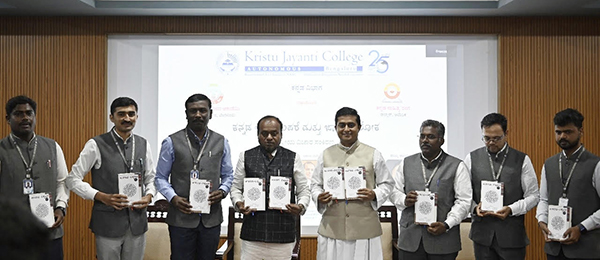
Seminar / Workshop / Webinar
National Seminar on “Indian Knowledge Tradition and Folk Literature”
Date: 25 & 26 February 2026
The Two-Day National Seminar on “Indian Knowledge Tradition and Folk Literature” organized by the Department of Hindi Studies, Faculty of Humanities, at Kristu Jayanti (Deemed-to-be University) commenced at 10:00 a.m. with an inaugural session. The seminar aimed to promote serious academic discourse on the nature, foundations, and contemporary relevance of the Indian Knowledge Tradition. The formal and impactful welcome address was delivered by the Convenor, Dr. M. Abdul Rajak, who warmly welcomed the distinguished guests, scholars, and participants. He highlighted the relevance of the seminar and described it as a meaningful initiative toward enriching Indian knowledge discourse. The introductory address was presented by Dr. Sreedhar P. D., Head of the Department of Hindi Studies. In his speech, he elaborated on the background, objectives, and framework of the seminar, emphasizing that the theme “Indian Knowledge Tradition and Folk Literature” is significant not only from an academic perspective but also as a powerful medium for reaffirming cultural identity and social values. The keynote address was delivered by Prof. Shriram Parihar, Former Director of Nirala Srijan Peeth, Department of Culture, Government of Madhya Pradesh, Bhopal. He described the Indian Knowledge Tradition as the foundation of the nation’s cultural identity and stated that folk literature preserves the life philosophy, value consciousness, and collective memory of Indian society. He emphasized the need to re-establish this tradition in the present global context. The session was presided over by Rev. Fr. Joshi Mathew, Director, Faculty of Humanities and Social Sciences. Dr. Kaveri Swami, Head of the Department of Social Sciences and Languages, was also specially present. The session was skillfully conducted by Dr. Vinod Baburao Meghsham. The vote of thanks was proposed by Dr. Mahamad Nayaz Pasha, who expressed gratitude to all scholars, participants, and members of the organizing committee. The first day of the seminar proved to be a significant step toward the in-depth exploration of Indian Knowledge Tradition and Folk Literature. The seminar was convened by Dr. M. Abdul Rajak, with Dr. Ganashetwar Sainath Nagnath and Dr. Krishna D. Lamani serving as Co-Convenors and playing active roles in the organization.
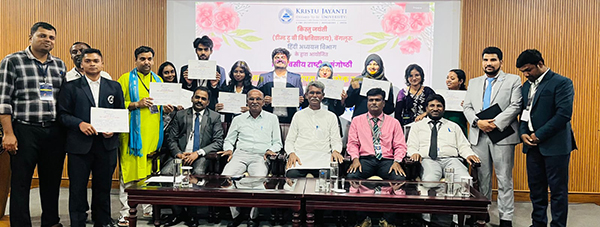
Second Day (26 February 2026) During the third academic session, special discussions were held on the preservation of folk languages and the challenges posed by the digital age. The speakers stressed the importance of digitization as a vital tool for safeguarding folk traditions. The fourth session focused on the contemporary relevance and future possibilities of the Indian Knowledge Tradition. In the valedictory session, the major outcomes of the seminar were presented, and certificates were distributed to the participants. The seminar successfully emerged as a strong academic platform fostering dialogue between Indian tradition, folk literature, and modern intellectual discourse.
द्वि-दिवसीय हिंदी राष्ट्रीय संगोष्ठी रिपोर्ट
बेंगलूरु, 25 फरवरी 2026 - किस्तु जयंती (डीम्ड-टु-बी) विश्वविद्यालय के मानविकी संकाय के हिंदी अध्ययन विभाग द्वारा आयोजित द्वि-दिवसीय राष्ट्रीय संगोष्ठी ‘भारतीय ज्ञान परंपरा और लोक साहित्य’ का शुभारंभ आज प्रातः 10:00 बजे उद्घाटन सत्र के साथ हुआ । संगोष्ठी का उद्देश्य भारतीय ज्ञान-परंपरा के स्वरूप, उसके आधार तथा समकालीन प्रासंगिकता पर गंभीर अकादमिक विमर्श को प्रोत्साहित करना है । कार्यक्रम के संयोजक डॉ. एम. अब्दुल रजाक द्वारा औपचारिक एवं प्रभावशाली स्वागत भाषण प्रस्तुत किया गया । उन्होंने सभी अतिथियों, विद्वानों एवं प्रतिभागियों का हार्दिक स्वागत करते हुए संगोष्ठी की प्रासंगिकता पर प्रकाश डाला और इसे भारतीय ज्ञान-विमर्श की दिशा में एक सार्थक पहल बताया । प्रास्ताविक भाषण हिंदी अध्ययन विभाग के विभागाध्यक्ष डॉ. श्रीधर पी. डी. ने दिया । अपने संबोधन में उन्होंने संगोष्ठी की पृष्ठभूमि, उद्देश्य और रूपरेखा पर विस्तार से प्रकाश डालते हुए कहा कि ‘भारतीय ज्ञान परंपरा और लोक साहित्य’ विषय न केवल अकादमिक दृष्टि से महत्त्वपूर्ण है, बल्कि यह हमारी सांस्कृतिक अस्मिता और सामाजिक मूल्यों की पुनर्स्मृति का भी सशक्त माध्यम है । उद्घाटन सत्र का मुख्य विषय था - ‘भारतीय ज्ञान परंपरा और लोक साहित्य’ । मुख्य उद्घाटन वक्तव्य में प्रो. श्रीराम परिहार, पूर्व निदेशक, निराला सृजन पीठ, संस्कृति विभाग, मध्य प्रदेश, भोपाल, ने भारतीय ज्ञान-परंपरा को राष्ट्र की सांस्कृतिक अस्मिता का मूलाधार बताते हुए कहा कि लोक साहित्य में भारतीय समाज की जीवन-दृष्टि, मूल्य-चेतना और सामूहिक स्मृति सुरक्षित है । उन्होंने इस परंपरा को वर्तमान वैश्विक संदर्भों में पुनर्स्थापित करने की आवश्यकता पर बल दिया । सत्र की अध्यक्षता मानविकी एवं समाज विज्ञान संकाय के निदेशक रे. फा. जोशी मैथ्यू ने की । समाज विज्ञान एवं भाषा विभाग की विभागाध्यक्षा डॉ. कावेरी स्वामी भी कार्यक्रम में विशेष रूप से उपस्थित रहीं । कार्यक्रम का संचालन डॉ. विनोद बाबूराव मेघशाम ने किया। अंत में डॉ. महमद नयाज पाशा ने धन्यवाद ज्ञापन प्रस्तुत करते हुए सभी विद्वानों, प्रतिभागियों एवं आयोजन समिति के सदस्यों का आभार व्यक्त किया । संगोष्ठी का प्रथम दिवस भारतीय ज्ञान-परंपरा और लोक साहित्य के गहन अध्ययन की दिशा में एक महत्वपूर्ण पहल सिद्ध हुआ । इस कार्यक्रम के संयोजक डॉ. एम. अब्दुल रजाक थे । सह-संयोजक के रूप में डॉ. गणशेटवार साईनाथ नागनाथ और डॉ. कृष्णा डी. लमाणि ने सक्रिय भूमिका निभाई ।
द्वितीय दिवस (26 फरवरी 2026) तृतीय सत्र में लोकभाषाओं के संरक्षण और डिजिटल युग की चुनौतियों पर विशेष चर्चा हुई । वक्ताओं ने डिजिटलीकरण के माध्यम से लोक परंपराओं के संरक्षण की आवश्यकता पर बल दिया । चतुर्थ सत्र में भारतीय ज्ञान परंपरा की समसामयिक उपयोगिता और संभावनाओं पर विमर्श हुआ । समापन सत्र में संगोष्ठी के निष्कर्ष प्रस्तुत किए गए तथा प्रतिभागियों को प्रमाण-पत्र प्रदान किए गए । यह संगोष्ठी भारतीय परंपरा, लोक साहित्य और आधुनिक विमर्श के समन्वय का एक सशक्त अकादमिक मंच सिद्ध हुई ।
Workshop on “Beyond the Body: Exploring the Moving Self”
Date: 19 February 2026
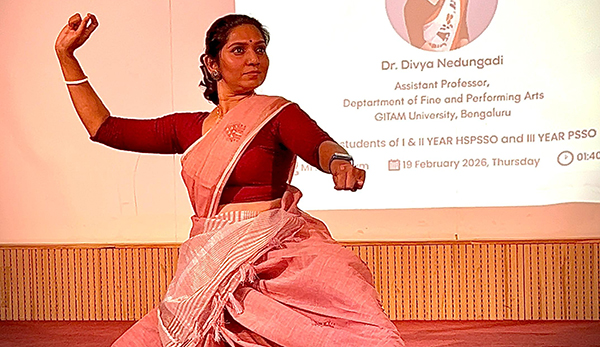
The Department of Sociology conducted a workshop titled “Beyond the Body: Exploring the Moving Self” on 19 February 2026 at the M1 Auditorium for I and II BA HSPSSO and III BA PSSO students. The session creatively blended sociology and movement, beginning with a dance depiction from the Mahabharata that reflected layered identities and the expressive power of the body. Through interactive activities, music, walking exercises, and discussions on emotions, students explored how the body communicates identity, memory, and social meaning. The workshop encouraged participants to reflect on the body not merely as a physical entity but as a dynamic site of knowledge, emotion, and self-expression, making the session both reflective and engaging.
Workshop on Traditional Games
Date: 23 September 2025
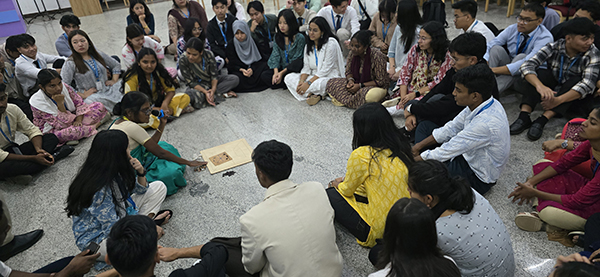
The Department of History, Kristu Jayanti Deemed to be University, organized a workshop on Traditional Games on 23rd September 2025. The resource person for the session was Ms. Immaculate Antony, Founder of Ima reCreation, who has been actively engaged in reviving and promoting indigenous games as a means of preserving cultural heritage. Through her engaging presentation and live demonstrations, Ms. Antony highlighted the educational and social value of traditional games, emphasizing their role in enhancing creativity, teamwork, and problem-solving skills. The interactive workshop provided students with an opportunity to experience these games first hand, rekindling the joy of community-based play while underscoring its relevance in contemporary times. The session was met with enthusiastic participation, fostering awareness on the importance of safeguarding intangible cultural traditions for future generations.
One-day Workshop on Brahmi Script
Date: 23 September 2025
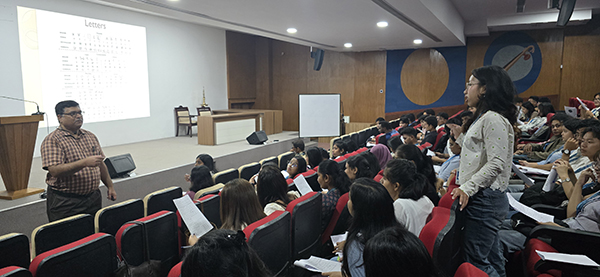
The Department of History, Kristu Jayanti Deemed to be University, Bengaluru, organized a one-day workshop on Brahmi Script on 18 September 2025. The session was conducted to provide undergraduate History students with a practical understanding of ancient Indian scripts and their role in reconstructing the history of early India. The workshop was facilitated by Dr. Gautam Jantakal, an eminent Numismatist, Center for Numismatics Studies, Bengaluru. Dr. Jantakal introduced the participants to the historical background of the Brahmi script. The session combined lecture-based learning with hands-on practice. Students were trained to identify and reproduce selected Brahmi characters, enabling them to develop basic skills in reading inscriptions. The initiative not only enriched the students’ academic learning but also encouraged a deeper appreciation of India’s epigraphic heritage.
International Seminar on "Kannada Ethical Heritage and Folklore"
Date: 17 January 2025
The inauguration of an international seminar on "Kannada Ethical Heritage and Folklore" organized by Kannada Department of Kristu Jayanti College in Bengaluru, in collaboration with the Karnataka Janapada Academy and the Kannada Sahithya Ranga of America. Key speakers included:
1. Shri Gollahalli Shivaprasad (President of Karnataka Janapada Academy) emphasized that folklore, a universal cultural heritage, transcends boundaries and fosters unity. He stressed the importance of learning from folk wisdom, which teaches values like truth, equality, and respect for life. He called for individuals to embrace these ideals, reject destructive modernity, and build a better world.
2. Dr. My. Shri. Nataraj (Chairman of Kannada Sahithya Ranga) highlighted the universal nature of folklore, noting similarities between the struggles of indigenous people worldwide. He endorsed the idea of "Vasudhaiva Kutumbakam" (the world is one family).
3. Prof. D.K. Chittaiah Poojar (Professor of Kannada) advocated for the study and inclusion of neglected local knowledge traditions and grassroots culture in literature, particularly from marginalized communities, to form a new literary movement.
4. Dr. Sujata Akki (Folklorist) spoke about the important role of women in folklore and the arts, underscoring how women’s contributions in areas like agriculture and artistic expression have shaped cultural heritage.
The event included the release of two research volumes, folk art performances, and the recognition of top research papers. The symposium also featured performances by folk artists and concluded with the awarding of "Best Research Paper" honors to several presenters.