Industrial Visits
Industrial Visit to State Forensic Science Laboratory and Fingerprint Bureau, Madiwala
Date: 10 April 2026
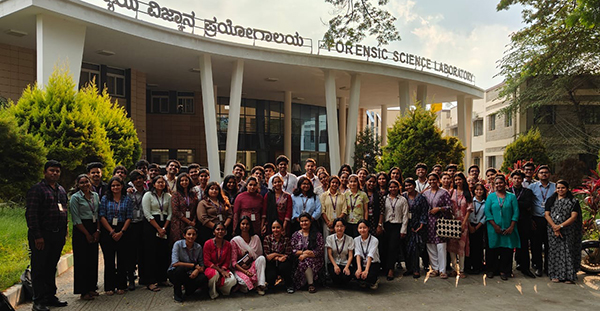
The Department of Forensic Science, Kristu Jayanti University, organised an educational visit to the State Forensic Science Laboratory, Madiwala, on 10th April for 70 students of the 2nd and 4th semesters of M.Sc. Forensic Science. The visit provided students with an opportunity to interact with scientific officers and experts from various divisions, including Forensic Physics, Forensic Chemistry, Digital Forensics, DNA Fingerprinting, and Photography. The officials shared their professional experiences and presented real case studies, offering valuable insights into practical forensic applications. The interactive sessions enabled students to clarify their doubts and strengthen their conceptual understanding. The visit also included a session at the Fingerprint Bureau, where experts demonstrated fingerprint analysis techniques and discussed real-life case examples. Overall, the visit was highly informative and helped bridge the gap between theoretical knowledge and practical forensic investigation, giving students a deeper understanding of real-world forensic practices.
Visit to NIMHANS Brain Museum
Date: 12/08/2025, 22/08/2025 and 29/08/2025
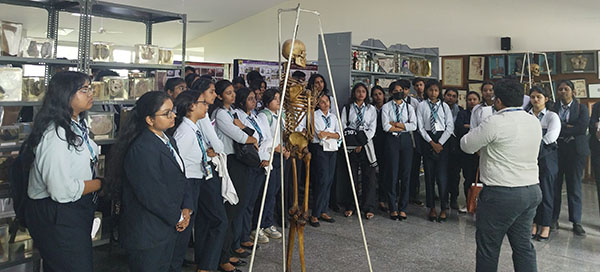
The Department of Forensic Science, Kristu Jayanti University, organized an industrial visit to the NIMHANS Brain Museum, Bangalore, across three slots on 12th August, 22nd August, and 29th August 2025. The visit was arranged for the III Semester Forensic Science, Criminology, and Biochemistry (Triple Major) students as well as the Forensic Science (Single Major) students.
The Brain Museum at NIMHANS, one of its kind in India, houses over 600 specimens showcasing normal brain anatomy, developmental anomalies, neurological disorders, tumors, strokes, infections, and traumatic injuries. Students were guided by experts who provided detailed explanations about the structural and functional aspects of the brain, along with the impact of neuropathological changes.
The visit offered an interdisciplinary perspective—from a forensic science viewpoint, it highlighted the medico-legal importance of brain injuries and pathologies; from a biochemistry lens, it demonstrated molecular and metabolic bases of brain disorders; and from a psychological angle, it emphasized the role of brain abnormalities in behavior, cognition, and mental health.
The educational experience enriched the students’ understanding by bridging theory with practice, fostering scientific curiosity and appreciation for the complexities of the human brain.
Industrial Visit to Anthropological Survey of India, Mysore
Date: 25 April 2025
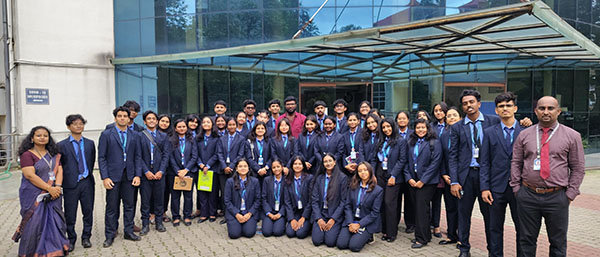
The students of IV Semester M.Sc. Forensic Science from [Your Institution Name] visited the Anthropological Survey of India, Mysore, as part of their academic industrial visit. The visit provided an excellent opportunity for the students to explore various aspects of physical and cultural anthropology. They gained insights into the evolutionary processes that have shaped human beings, and learned about anthropometric measurements, skeletal analysis, and the impact of cultural practices on human societies.
During the visit, students were also introduced to the institution’s advanced DNA laboratory facilities. They observed processes such as sterilization techniques, DNA extraction methods, gel documentation procedures, PCR amplification, and DNA sequencing. This exposure helped students understand the integration of molecular biology techniques in anthropological and forensic research. The visit significantly enhanced the students' practical knowledge by connecting theoretical concepts with real-world applications. It also fostered an appreciation of the interdisciplinary nature of forensic science and anthropology, strengthening their scientific and analytical skills.
Industrial Visit to St. John’s Medical College, Madiwala
Date: 21 & 22 April 2025
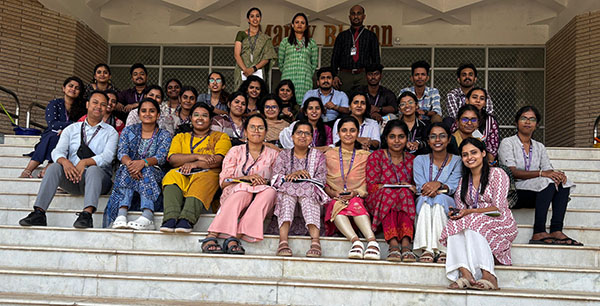
The students of VI semester BSc Forensic Science, recently visited the Forensic Medicine and Toxicology Museum and Postmortem Room at St. John’s Medical College, Madiwala, as part of their academic curriculum. Spread over two days, the visit provided students with invaluable hands-on exposure to medico-legal procedures. They had the rare opportunity to witness three postmortem examinations, allowing them to observe the practical aspects of autopsy procedures, injury documentation, cause of death determination, and estimation of the time since death.
At the Forensic Medicine and Toxicology Museum, students explored a wide range of exhibits, including skeletal remains, weapons, injury models, and toxicological specimens. Through these displays, they enhanced their understanding of key forensic concepts such as types of wounds, fracture patterns, methods for age estimation using bones, and the identification of poisons. The museum visit reinforced the theoretical knowledge acquired in classrooms and offered a real-world perspective on forensic investigations.
The learning outcomes of the visit were significant. Students developed a practical understanding of postmortem procedures, recognized various injury types and their medico-legal relevance, and gained insight into toxicological evidence and its role in legal cases. They also appreciated the critical role that forensic medicine plays in the justice system. Overall, the industrial visit was a highly enriching experience that bridged the gap between theoretical learning and practical application in forensic science.