Conferences
5th International Conference on Advances in Forensic Science (ICAFS 2026)
Date: 12 & 13 March 2026
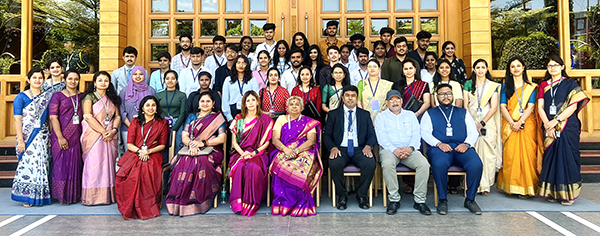
The Department of Forensic Science, School of Biological and Forensic Sciences at Kristu Jayanti (Deemed To Be) University, Bengaluru, successfully organised the 5th International Conference on Advances in Forensic Science (ICAFS 2026) on 12th and 13th March 2026. The conference brought together forensic experts, researchers, academicians, and students to deliberate on emerging trends and innovations in forensic science and their applications in the criminal justice system.
The conference commenced with the Presidential Address delivered by Fr. Dr. Lijo P. Thomas, who addressed the gathering and highlighted the institution’s commitment to academic excellence and research in forensic science. The conference was inaugurated by Dr. G. K. Goswami, Founding Director of the Uttar Pradesh State Institute of Forensic Sciences (UPSIFS), Lucknow, who emphasized the growing importance of forensic science in strengthening the criminal justice system through scientific and technological advancements. The inaugural session underscored the significance of interdisciplinary research and collaboration in forensic science, setting the tone for the technical sessions that followed.
The conference featured a series of insightful technical sessions delivered by distinguished experts from various domains of forensic science. Dr. G. K. Goswami led the first session, sharing his expertise on contemporary developments and institutional advancements in forensic science education and practice. Dr. G. S. Sodhi, Associate Professor at S. G. T. B. Khalsa College, University of Delhi, conducted the second session, offering valuable insights into forensic science applications and academic research. The third session was delivered by Dr. Indira Sudha, Former Director and Former Assistant Director at the Central Fingerprint Bureau and Wildlife Crime Control Bureau, Delhi, who elaborated on practical aspects of forensic investigations, with special emphasis on fingerprint analysis and wildlife forensics. The fourth session was handled by Dr. Aparna R., Assistant Professor at Jain University, Bengaluru, who discussed emerging areas and research perspectives in forensic science, encouraging students and researchers to explore innovative approaches in the discipline.
The conference also provided a platform for both oral and poster presentations, showcasing innovative research work by participants across diverse areas of forensic science. The event witnessed enthusiastic participation, with a total of 231 in-house participants and 76 external delegates from various institutions. It facilitated dynamic knowledge exchange, academic interaction, and professional networking among attendees.
Overall, ICAFS 2026 was a successful academic endeavor that reinforced the significance of forensic science in modern-day investigations and inspired participants to contribute towards advancements in the field.
International Conference on Advanced Forensic Science (ICAFS 4.0) 2025
Date: 13 & 14 March 2025
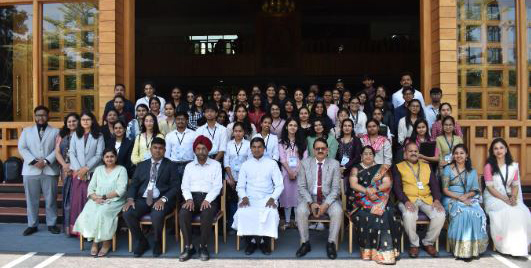
The Department of Forensic Science at Kristu Jayanti College, Bengaluru, successfully organized the 4th International Conference on Advanced Forensic Science (ICAFS 4.0) on 13th and 14th March 2025. The conference brought together forensic experts, researchers, and academicians to discuss advancements in forensic science and its applications in criminal justice.
The conference was inaugurated by Dr. Rukmani Krishnamurthy, CEO & Director of Helik Advisory Lab, Mumbai, who highlighted the evolving role of forensic science in criminal investigations. The presidential address was delivered by Fr. Dr. Augustine George, Principal, Kristu Jayanti College, Bengaluru, emphasizing the importance of research and interdisciplinary collaboration in forensic science.
Dr. Rukmani Krishnamurthy, in her keynote address shared her extensive experience in forensic investigations and stressed the significance of integrating forensic advancements with law enforcement practices.
The conference featured five technical sessions with expert speakers from various forensic domains. Dr. Vandana Vinayak, Assistant Professor at Dr. Hari Singh Gour Central University, Sagar, spoke on forensic diatomology in drowning cases. Dr. Lata Gautam, Associate Professor at Anglia Ruskin University, UK, discussed forensic toxicology approaches for detecting and preventing drink spiking. Major Dr. Pramod G. Bagali, Chief Medical Officer & CEO of Witty Charman Group, Malaysia, introduced the No Cut Virtual Autopsy concept, demonstrating its significance in forensic pathology. Dr. Ankit Srivastava, Associate Professor at WB National University of Judicial Sciences, Kolkata, provided insights into forensic DNA analysis, forensic genealogy, and rapid DNA techniques. Prof. Dr. Ma Teresa G. De Guzman, Dean at the University of the Philippines, Manila, emphasized the role of behavioral science in forensic investigations, including suspect profiling and forensic interviewing techniques.
The conference witnessed over 200 delegates across the nation and a total of 43 research papers and 44 poster presentations were showcased, featuring contributions from over 30 institutions. The research presentations covered diverse forensic science disciplines, including forensic biology, digital forensics, crime scene investigation, forensic chemistry, forensic toxicology, and forensic anthropology.
The event served as a platform for knowledge exchange, academic collaboration, and discussions on the latest forensic advancements, reinforcing the importance of forensic science in modern criminal investigations and justice delivery.