Research Empowerment
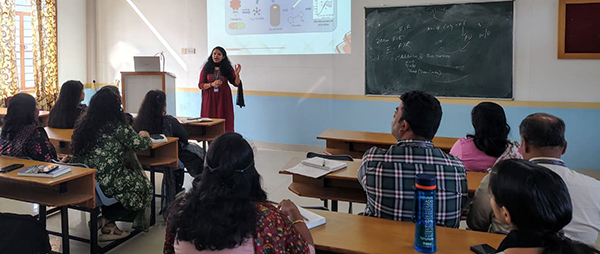
Research Day Expert Talk – "Effective Use of AI in Research"
Date: 05 September 2026
The Department of Forensic Science, School of Biological and Forensic Sciences, Kristu Jayanti (Deemed to be University), organised a Research Day Expert Talk titled "Effective Use of AI in Research" for faculty members of the department on 5th September 2026. A total of 29 faculty members benefited from this programme.
The session was conducted by Ms. Riya Raj, Assistant Professor, Department of Forensic Science, at Room No. 505, 5th Floor, Science Block – I, Central Campus, from 9:00 AM onwards.
The talk provided faculty members with a comprehensive understanding of how artificial intelligence can be effectively integrated into the research process, covering AI-assisted literature review, data analysis, and academic writing, along with best practices for maintaining research integrity and the ethical use of AI tools. Through practical demonstrations and real-world examples, participants gained valuable insights into leveraging AI to enhance research efficiency and quality.
The programme enhanced faculty members' understanding of the effective and ethical use of AI in research, strengthened their awareness of AI-based tools for literature review, data analysis, and academic writing, and promoted a culture of responsible AI adoption within the Department of Forensic Science.
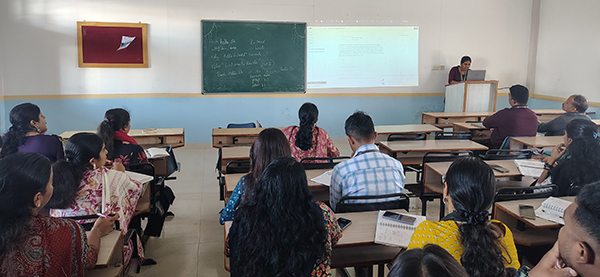
Research Day Expert Talk – "Research Grant Writing – An Overview"
Date: 22 August 2026
The Department of Forensic Science, School of Biological and Forensic Sciences, Kristu Jayanti (Deemed to be University), organised a Research Day Expert Talk titled "Research Grant Writing – An Overview" for faculty members of the department on 22nd August 2026. A total of 28 faculty members benefited from this programme.
The session was conducted by Dr. Sowmya Kumar, Associate Professor, Department of Forensic Science, at Room No. 408, 5th Floor, Science Block, Central Campus, from 9:00 AM onwards.
The talk provided faculty members with a comprehensive understanding of the research grant writing process, covering the identification of funding agencies, proposal structuring, budget planning, and strategies to enhance the success of extramural research proposals. Through practical insights and real-world examples, participants gained valuable perspectives on drafting fundable research ideas and navigating the grant application process effectively.
The programme enhanced faculty members' understanding of the research grant writing process, strengthened their awareness of funding opportunities and proposal development strategies, and promoted a culture of extramural research funding within the Department of Forensic Science.
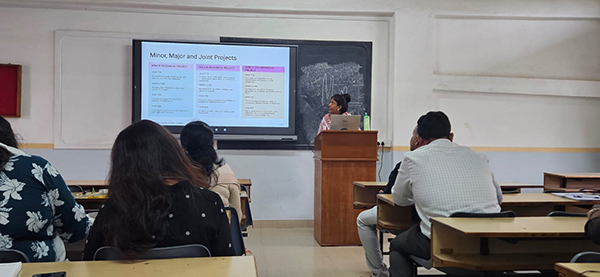
Understanding Youth Risk Behaviour Survey through Structural Equation Modeling
Date: 21 February 2026
The Department of Forensic Science, School of Biological and Forensic Sciences, organised a session under the Research Empowerment Series titled “Understanding Youth Risk Behaviour Survey through Structural Equation Modeling” on 21 February 2026 from 09.00 AM to 10.00 AM at M506, Fifth Floor, Science Block for the faculty of the Department of Forensic Science, with a total of 20 beneficiaries.
The session was delivered by Dr. Kaviya Shankar, Assistant Professor, Department of Forensic Science, Kristu Jayanti (Deemed to be University). The programme aimed to strengthen research methodology skills among faculty members by introducing advanced statistical tools used in behavioural and forensic research.
Dr. Kaviya Shankar provided an overview of the Youth Risk Behaviour Survey (YRBS) and explained its importance in understanding patterns of delinquency, substance abuse, violence, and other high-risk behaviours among youth. She also introduced Structural Equation Modeling (SEM) as an advanced statistical technique used to analyse complex relationships among behavioural and social variables.
The session was informative and interactive, helping participants understand the application of SEM in criminology, forensic science, and behavioural research, while also highlighting the importance of data-driven approaches in academic research and publication.
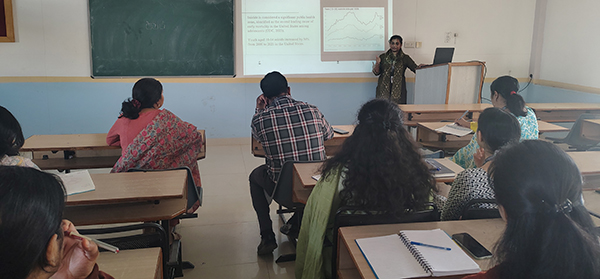
Smart Sensors, Silent Witnesses: The Electrochemical Future of Forensics
Date: 31 January 2026
The Department of Forensic Science, School of Biological and Forensic Sciences, organised a research empowerment session titled “Smart Sensors, Silent Witnesses: The Electrochemical Future of Forensics” on 31 January 2026 as part of Research Day activities for the faculty of the Department of Forensic Science, School of Biological and Forensic Sciences, with a total of 21 beneficiaries.
The session was delivered by Dr. Sumi Sundaresan, Assistant Professor, Department of Forensic Science, Kristu Jayanti (Deemed to be University). The programme aimed to promote research orientation among faculty members by exploring emerging interdisciplinary technologies that can be integrated into forensic science teaching, research, and innovation.
Dr. Sundaresan highlighted the growing importance of electrochemical smart sensors in modern forensic investigations, explaining how these technologies enable rapid, sensitive, and reliable detection of substances such as drugs, explosives, toxins, and biological markers. She also discussed the interdisciplinary nature of sensor research involving chemistry, nanotechnology, material science, and electronics, and emphasized their potential applications in forensic laboratories and research.
The session was informative and interactive, encouraging faculty members to explore innovative research directions and integrate advanced analytical technologies into academic research, student projects, and forensic investigations.