Internship
Summer Internship 2026 - Forensic Laboratory Practices
Date: 15 June to 04 July 2026
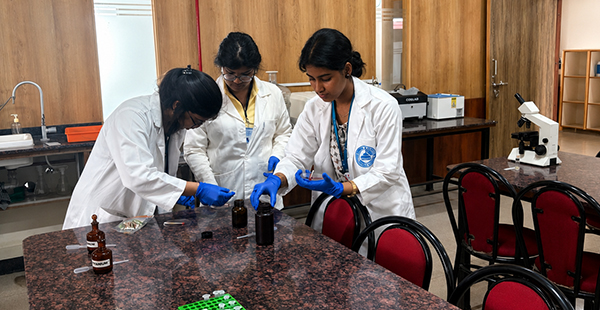
The Department of Forensic Science, School of Biological and Forensic Sciences, successfully organised a 15-Day Summer Internship on Forensic Laboratory Practices with the objective of bridging the gap between classroom learning and professional forensic practice. The program was conducted from 15th June 2026 to 4th July 2026. The internship brought together six participants from three different states of India, providing them with an intensive, hands-on learning experience in modern forensic science.
The programme was designed to familiarize participants with the complete forensic laboratory workflow, beginning with case registration, evidence handling, preservation, and documentation, and progressing through scientific examination, analysis, interpretation of findings, and forensic report writing. Emphasis was placed on developing practical competencies, adherence to laboratory protocols, and understanding the evidentiary value of scientific analysis in criminal investigations.
The internship offered comprehensive practical training across six major domains of forensic science: Forensic Biology, Serology and DNA Analysis, Forensic Toxicology, Questioned Document Examination and Fingerprint Analysis, Forensic Psychology, Digital and Cyber Forensic Science and Forensic Physics and Ballistics. Each domain included two days of laboratory-based sessions, enabling participants to work with forensic instruments, examine evidentiary materials, perform analytical procedures, and understand the standard operating practices followed in forensic laboratories.
To complement the laboratory training, the programme included educational field visits to a Police Station and a Post-Mortem Examination facility, where participants gained first-hand exposure to crime investigation procedures, evidence management, medico-legal investigations, and the collaborative role of forensic experts within the criminal justice system. These experiences provided valuable practical insights into the application of forensic science beyond the laboratory environment.
The internship concluded with participants successfully completing the practical training and demonstrating a deeper understanding of forensic laboratory practices and investigative procedures. As the first edition of this initiative, the programme marked a significant milestone for the Department of Forensic Science in its commitment to experiential learning and professional skill development. The successful conduct of the internship reinforced the department's vision of producing competent, practice-ready forensic professionals equipped to meet the evolving demands of forensic investigation and criminal justice.