Academic Enrichment Programs
Beauveria Bootcamp 2026 – isolate, characterize and identify an entomopathogen
Date: 18 to 20 August 2026
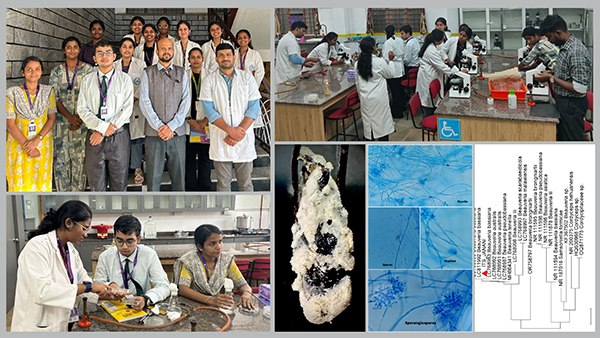
The Beauveria Bootcamp 2026, conducted by the BioSkills Studio, Department of Life Sciences, Kristu Jayanti University, brought together M.Sc. students and PhD scholars from JSS Science and Technology University and Kristu Jayanti University for an intensive, hands-on introduction to the isolation, identification and molecular characterization of Beauveria. Over three days, participants progressed from inspecting Beauveria-infected weevil cadavers and documenting colony morphology of Beauveria bassiana grown on SDA to examining mycelia, hyphae, sporulative structures and spore morphology through LPCB microscopy, followed by preparation of agar buttons for culture preservation. The final day introduced participants to molecular characterization, where ITS and TEF1 gene sequencing provided evidence supporting the identification of the isolate as Beauveria bassiana. Participants were trained in BLAST analysis, pairwise genetic distance estimation and phylogenetic tree construction using MEGA, and the generated sequences were submitted to GenBank under accession numbers PZ861801 (ITS) and PZ862851 (TEF1), scheduled for public availability after 25 August 2026. Volunteers from the student-led startup Microlyze supported participants through both wet-lab and dry-lab activities. Conducted over three days and nine hours, the bootcamp demonstrated a complete workflow from infected insect → fungal isolation → morphological characterization → microscopy → DNA sequencing → sequence analysis → phylogeny → GenBank, with a technical report being prepared to document the protocols, observations and data generated during the programme for wider academic and research use.
Sunlight to Synopsis – an experiential research methodology exercise
Date: 13 August 2026
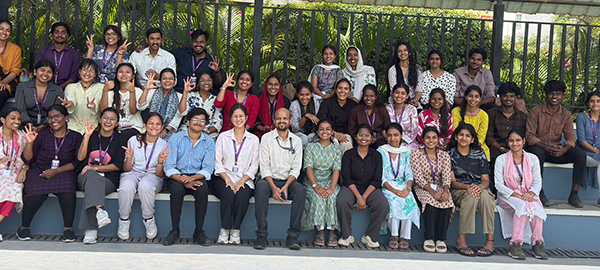
On 13 August 2026, the II Year MSc Microbiology students participated in an experiential research methodology exercise titled “From Sunlight to Synopsis”, taking research learning beyond the conventional classroom and laboratory setting. Using a basketball court as an unconventional research environment, the activity encouraged students to observe, question, and critically examine a familiar activity through the lens of research methodology. The exercise highlighted how research begins with curiosity and systematic observation, irrespective of the setting.
The activity followed a simple yet meaningful research cycle—Play → Observe → Question → Investigate → Interpret → Communicate—enabling students to connect everyday observations with the fundamentals of scientific inquiry. Through teamwork, active participation, and reflective discussion, students experienced how an ordinary activity can generate research questions and lead to structured investigation and interpretation. The session provided an engaging afternoon of experiential learning and reinforced the idea that every research journey begins with an observation.
Alumni Interaction on ‘Gateway to Research Careers: CSIR NET and SET Excellence’
Date: 09 April 2026
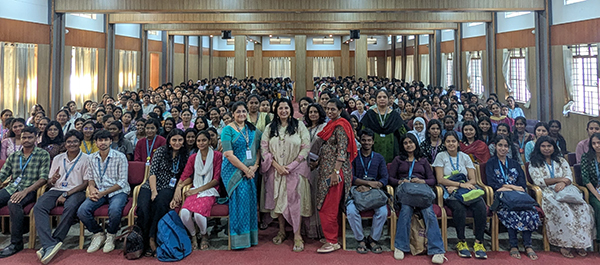
The Centre for UGC and CSIR NET/JRF Training in collaboration with Department of Life Sciences, School of Biological and Forensic Sciences at Kristu Jayanti (Deemed to be University), Bengaluru organized an Alumni Interaction on “Gateway to Research Careers: CSIR NET and SET Excellence” for the II PG Life Science students. The session featured two distinguished alumni as resource persons: Ms. Selvapriya (2023 -2025 batch), Teaching Faculty in the Department of Life Sciences at Kristu Jayanti University, and Ms. Neha Brijith Rinso (2020 -2023 batch), BITP Trainee at the Haffkine Institute of Training, Research and Testing, Mumbai. Both speakers shared valuable insights into preparing for competitive examinations such as CSIR NET. SET and other similar examinations focussing on research careers. They highlighted effective strategies, common challenges, and the importance of perseverance in building a successful research career. Their interaction not only provided practical guidance but also motivated students to pursue excellence in research, reinforcing the significance of alumni engagement in shaping academic and professional aspirations. The event witnessed the participation of over 130 students and faculty members.
Expert lecture on mass spectrometry for proteomics
Date: 08 April 2026
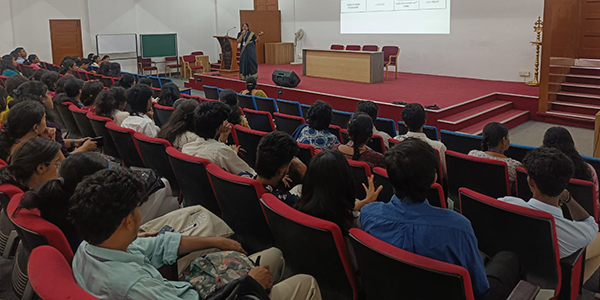
Department of Life Sciences organized an expert session by Dr. Arun Surendran, Senior Manager and Officer-in-Charge at the Mass Spectrometry Core Facility, Rajiv Gandhi Centre for Biotechnology (RGCB), Trivandrum on 08/04/2026 on the topic mass spectrometry for proteomics. The session was hybrid mode and attended by II semester M.Sc. Biotechnology, microbiology and biochemistry students. It was practical learning for the students as they session was conducted with a practical prospectives on interfacing of MS such as LC-MS/MS and peptide mass fingerprinting.
Expert Talk on Industry-Academia Interface
Date: 23 February 2026
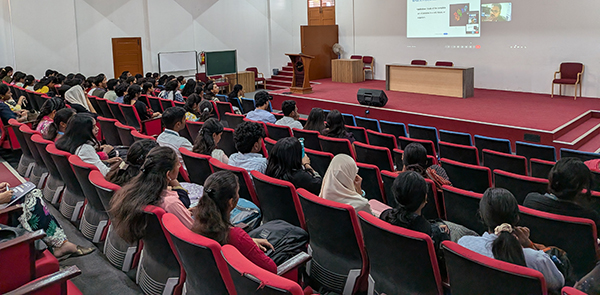
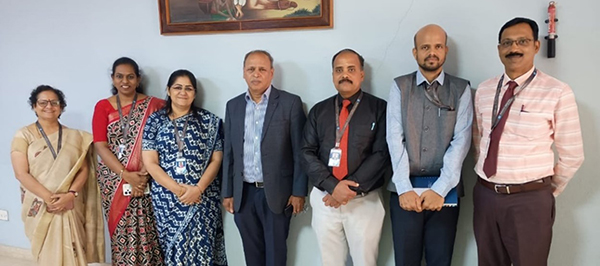
An interactive session with Mr. M. Ramakrishna, CEO of Maithri Aquatech, was organized with the aim of gaining valuable industry insights to enhance the institution’s placement strategies. Dean Academics- Dr Jude Calistius, Dean- School of Biological and Forensic sciences, Dr Vijayanand, Head of Department- Department of Life Sciences, Dr Gurunathan and Dr Prasanna Kumar, members of the Placement Cell-Department of Life sciences and Dr Lakshmi Garimella Department of Life Sciences were present.The session focused on understanding how academic institutions can better prepare students for the workforce and improve their employability through meaningful industry engagement. During the interaction, Mr. Ramakrishna emphasized that internships serve as one of the most effective pathways to securing employment. He highlighted that internships allow students to gain practical exposure, understand workplace expectations, and demonstrate their abilities to potential employers. According to him, students who show sincerity, dedication, and commitment during their internship period are more likely to receive job offers from the organizations where they train. He further pointed out that faculty members play a critical role in strengthening the placement ecosystem. He suggested that faculty should maintain continuous communication with industry mentors and supervisors to monitor students’ progress during internships. Regular follow-up regarding students’ performance, behaviour, and commitment can help institutions understand how well students adapt to professional environments. Such engagement would gradually lead to sustained and long-term improvements in placement outcomes.
Mr. Ramakrishna also addressed the importance of identifying and addressing existing skill gaps among students. He recommended that academic departments actively interact with industry professionals to understand the current skill sets required in the job market. By incorporating these industry-relevant skills into the curriculum and training programmes, institutions can better equip students with the competencies needed to succeed in their careers.
The session provided valuable insights into strengthening the collaboration between academia and industry. The discussion highlighted the importance of internships, faculty involvement, and curriculum alignment with industry needs as key factors in enhancing students’ employability and improving placement opportunities.
International Expert Lecture on ‘Beyond Antibiotics: Non-Traditional Strategies to Combat Antimicrobial Resistance'
Date: 20 February 2026
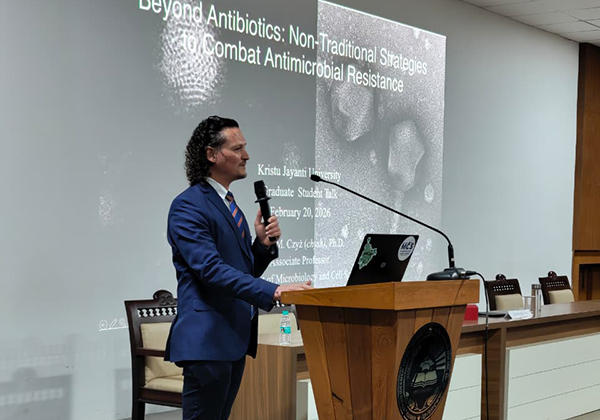
An International Expert Lecture was organized by the Department of Life Sciences, School of Biological and Forensic Sciences at Kristu Jayanti University on 21st February 2026. Dr. Daniel M. Czyz from the University of Florida was the distinguished speaker of the day and delivered a lecture titled “Beyond Antibiotics: Non-traditional Strategies to Combat Antimicrobial Resistance.” Dr. Czyz examined the escalating crisis of antimicrobial resistance (AMR), stressing that conventional antibiotics are increasingly inadequate in addressing resistant pathogens. He introduced innovative approaches such as bacteriophage therapy, silver nanoparticles and microbiome modulation, highlighting their potential as sustainable and effective alternatives. The lecture emphasized the necessity of interdisciplinary collaboration, integrating microbiology, molecular biology, and biomedical sciences to develop comprehensive solutions. Dr. Czyz also underscored the global health implications of AMR, noting that resistance undermines current treatments and poses significant risks to future medical advances. The session provided postgraduate students with critical insights into emerging research directions, encouraging them to adopt innovative perspectives and interdisciplinary strategies in their academic pursuits. The program successfully achieved its objective of inspiring young researchers to contribute meaningfully to the global effort against antimicrobial resistance, thereby reinforcing the institution’s dedication to cultivating a responsible and forward-looking research culture.
Hands on Skill Development Training in Polymerase Chain Reaction
Date: 16, 17 & 26 October 2025
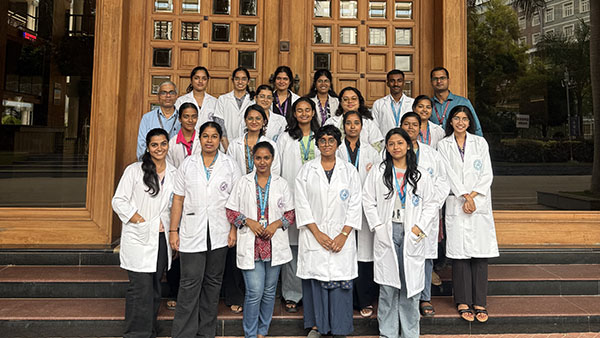
The Department of Life Sciences organised “Hands on Skill Development Training in Polymerase Chain Reaction” for I and II-year PG Life Science students and I, II and III Year UG Life Sciences students from 16th ,17th and 26th October 2025. The first day of the workshop focused on the theoretical aspects of PCR and the crucial step of primer designing, followed by hands-on training in setting up a PCR reaction.
The session commenced with an introductory lecture covering the fundamental principles of PCR, including denaturation, annealing, and extension phases. Key components of a PCR reaction, such as DNA template, primers, DNA polymerase, dNTPs, and buffer, were thoroughly explained. The significance of each component and their optimal concentrations for efficient amplification were highlighted. The primer 3 plus software usage in designing the primer and also analysing the primer using oligoanalyser tool were discussed and hands on was done. The second day of the workshop focused on the visualization and analysis of the amplified PCR products using agarose gel electrophoresis. The two-day hands-on PCR training workshop provided participants with a valuable learning experience, encompassing both the theoretical foundations and practical skills essential for performing PCR and analysing the results. The interactive sessions, combined with hands-on practice in primer designing, PCR setup, gel loading, and running, equipped the participants with the confidence and competence to apply these techniques in their future research endeavours. The positive feedback received from the participants indicates the effectiveness of the workshop in achieving its objectives.
Confluence 2025 - Book Release & Mini Symposium
Date: 16 September 2025
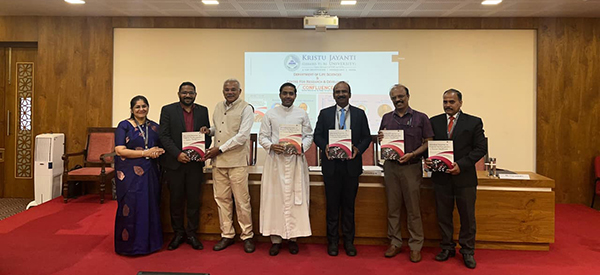
The Department of Life Sciences and Centre for Research & Development, Kristu Jayanti University, Bengaluru, organized Confluence 2025 – Book Release and Mini Symposium on 16th September 2025. The event commenced with the release of the book “Microbial Enzymes as Potential Biotherapeutics in Human Healthcare.” The book was released by Rev. Fr. Joshy Mathew, Chief Human Resource Officer & Director, School of Humanities and Social Sciences, Kristu Jayanti University, and the first copy was received by Dr. Aloysius Edward, Registrar (In-charge), Kristu Jayanti University. The Mini Symposium session witnessed two plenary addresses delivered by distinguished experts in the field. Dr. Sabu Abdulhameed, Author & Member Secretary, Kerala State Council for Science, Technology & Environment (KSCSTE), Trivandrum, Kerala, in his address emphasized the significance of microbial enzymes in advancing healthcare solutions and their contribution to sustainable biomedical applications. Dr. Jayachandran K., Author & Professor, School of Biosciences, Mahatma Gandhi University, Kottayam, Kerala, provided valuable insights into the therapeutic applications of microbial enzymes, highlighting their potential as emerging tools in human healthcare. The event concluded with the Author’s Note of Gratitude by Dr. Dileep Francis, Author & Dean, Research & Development, Kristu Jayanti University, who expressed appreciation to the dignitaries and participants for their support and contribution to the success of the event.
Awareness Session on Substance Abuse
Date: 12 September 2025
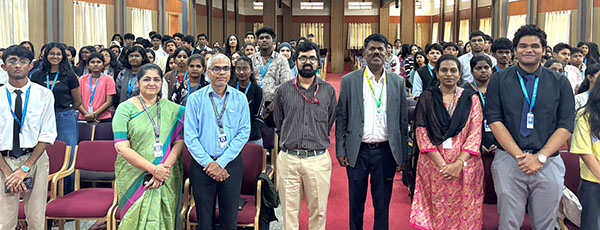
Substance abuse is an increasing concern among today’s youth, affecting not only health but also family and society. To address this issue, an awareness talk was organized by Department of Life sciences to educate students on the harmful effects of drugs, alcohol, and other addictive substances. The session highlighted the physical, psychological, and social consequences of substance use. Resource persons Mr. S.J Chander , CEO, FSHI and Dr.Jayant M, NIMHANS emphasized the importance of making informed choices and seeking timely help when needed. An interactive discussion was held to clarify doubts and encourage students to adopt healthy lifestyles. The program aimed to empower young minds with knowledge and resilience to stay away from substance abuse
Alumni Expert Lecture
Date: 23 August 2025
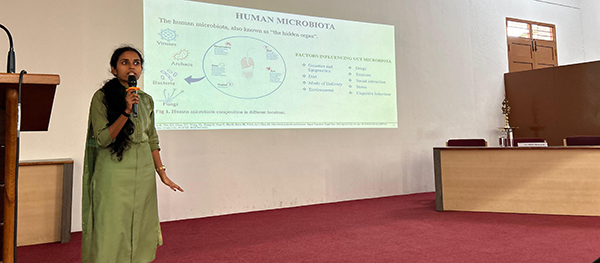
The Department of Life Sciences, School of Biological & Forensic Sciences, Kristu Jayanti University, organized an Alumni Expert Lecture on “Short Chain Fatty Acids in Cancer Therapy” on 23rd August 2025 at 9:30 AM in the M3 Auditorium, Science Block, III Floor. The resource person for the session was Ms. Nidhi Prakash, Research Scholar and K-DST Fellow, Bangalore University, Jnanabharathi Campus, and alumna of M.Sc. Microbiology (2016–2018 batch), Kristu Jayanti University. The lecture focused on the emerging role of short-chain fatty acids as potential therapeutic agents in cancer treatment. Ms. Nidhi Prakash shared her research insights, highlighting mechanisms, applications, and future prospects in biotechnology and medical science. The session was attended by I & II year PG students of Biotechnology, Microbiology, and Biochemistry. Students actively interacted with the resource person and gained valuable knowledge on the research opportunities in cancer biology. The lecture concluded with an interactive Q&A session, followed by a vote of thanks. The event served as an excellent platform for students to learn from the research experiences of an accomplished alumna.
Tiny Greens, Mighty Impact: Unlocking the journey of microgreens and their innovations in health, food, and agriculture
Date: 29 August 2025
A skill development orientation series on "Tiny Greens, Mighty Impact: Unlocking the Journey of Microgreens and Their Innovations in Health, Food, and Agriculture" was held on August 29, 2025, for B.Sc Botany students. The session was organized by the Department of Life Sciences and featured Mrs. Selva Mary (Latha), Founder of Sunrudh Microgreens, as the guest speaker. The orientation provided an in-depth look into the world of microgreens, highlighting their significance beyond simple culinary use. Mrs. Selva Mary defined microgreens as the first true leaves of plants, harvested at a very young stage, typically 7-14 days after germination. She emphasized the nutritional superiority of microgreens, explaining that they often contain higher concentrations of vitamins, minerals, and antioxidants compared to their mature counterparts. This makes them a "superfood" with immense potential in promoting health and wellness. The session covered the scientific basis for this nutritional density, linking it to the plant's early growth stage when it is rich in concentrated nutrients necessary for development. Mrs. Selva Mary also discussed the innovative applications of microgreens in food, with their intense flavour profiles and vibrant colours making them a popular ingredient in gourmet cuisine, from salads and sandwiches to smoothies and garnishes. She also highlighted their high nutritional content, that makes them potential candidates in nutraceuticals and dietary supplements. The session touched upon the sustainable and space-efficient nature of microgreen cultivation, which requires minimal water and can be grown indoors in small spaces. This makes them a viable option for urban farming and a potential solution for food security in densely populated areas. Students were enlightened and encouraged for hands on training in microgreen cultivation.
Skill Orientation Lecture on “From Gene to Cure: CRISPR's Promise in Diagnostics and Therapy”
Date: 09 August 2025
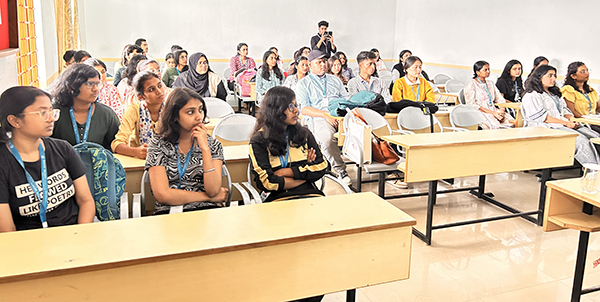
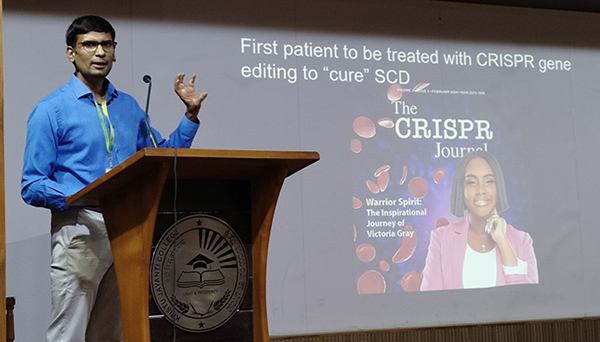
The Department of Life Sciences, Kristu Jayanti (Deemed to be University), organized a skill orientation session for MSc students on 9 August 2025. The talk was facilitated by Dr. Gokul Kesavan, Director of Cascore Bio Pvt Ltd, on the theme “From Gene to Cure: CRISPR's Promise in Diagnostics and Therapy”. Dr. Kesavan introduced the audience to the core principles of CRISPR, the revolutionary gene-editing technology derived from the bacterial immune system, and its transformative impact on modern biology. He explained how CRISPR has evolved from a fundamental scientific discovery to a powerful tool with tangible therapeutic and diagnostic applications.
The lecture highlighted CRISPR’s success in treating genetic diseases such as Sickle Cell Anemia, alongside its emerging role in point-of-care diagnostics for infectious diseases and cancer. Special emphasis was placed on how CRISPR-based platforms are being adapted for affordable and accessible diagnostics in low-resource settings, bridging gaps in global healthcare. By integrating molecular biology concepts with clinical relevance and translational research examples, the session inspired students to view CRISPR not merely as a laboratory tool, but as a driving force for innovation in biomedical science. The orientation concluded with an engaging interaction, encouraging students to explore research avenues where CRISPR can address real-world healthcare challenges.
The students were able to describe the mechanism of CRISPR and its precision in gene editing, relate this knowledge to its applications in diagnostics and therapy, and evaluate real-world examples in managing genetic and infectious diseases. They were also able to assess the ethical, legal, and social implications of CRISPR use in healthcare, and develop innovative ideas for its future role in disease detection, treatment, and potential cures.
Experience Sharing On Early Breast Cancer Detection Awareness
Date: 13 March 2025
On March 13, 2025, an awareness session on early breast cancer detection was conducted at 3:30 PM in the M1 Auditorium of Kristu Jayanti College, organized by the Department of Life Sciences. The session aimed to educate students on breast cancer prevention, the importance of early detection, and available support resources. It was attended by undergraduate students from BSc BGB A, BGB B, MBB, BBB, FBB (2nd semester), and MBGE, BTBO, BTBC (4th semester), along with postgraduate students from MSc Biochemistry, Biotechnology, and Microbiology.
Breast cancer is one of the most common cancers worldwide, but with early detection, awareness, and timely treatment, survival rates improve significantly. Ms. Nisha Jose, a cancer survivor and social enabler, led the session by sharing her personal journey and emphasizing the importance of regular screenings and self-examinations. She highlighted how lifestyle changes such as balanced nutrition, physical activity, and stress management can reduce cancer risks. Beyond her advocacy for cancer awareness, she is the visionary behind the initiative "One India One River One Woman," which promotes environmental sustainability and women's empowerment. As a PADI-certified deep-sea diver, author, and motivational speaker, she has inspired many with her story of resilience and perseverance. The session provided valuable insights, encouraged open discussions, and motivated students to take proactive steps in their health while spreading awareness within their communities.