Life Skills Enrichment Programmes
Capacity Building Training on Life Skills for the Students
Date: 27 to 29 July 2026
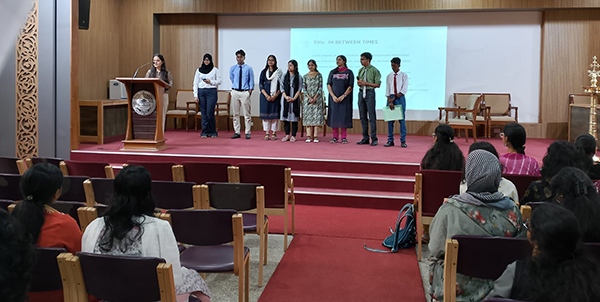
The Department of Life Sciences organized a Capacity Building Training Programme on Life Skills Education for first-year PG Life Science students of I M.Sc. Biotechnology, Microbiology, Biochemistry and Bioinformatics, Physics, Applied Statistics and Data Analytics on 27/07/2026, 28/07/2026, and 29/07/2026. The training programme focused on the ten core life skills: Introduction to Life Skills, Decision Making, Coping with Emotions, Problem Solving, Self-awareness, Effective Communication, Stress Management, Empathy, Creative Thinking, Critical Thinking, and the Application of Life Skills in Everyday Life. The sessions were designed to be highly interactive and activity-based, encouraging active student participation through games, group discussions, role plays, skits, debates, and other engaging learning activities. The programme emphasized the importance of life skills in fostering holistic personality development, enhancing emotional intelligence, promoting effective interpersonal relationships, and enabling students to make informed decisions in their personal and professional lives. These essential life skills also equip students with the competencies required to meet the challenges of higher education and future careers. Dr. Dr. Priya Josson, HOD, Department of Life Sciences, introduced the concept and significance of the ten core life skills to the students. She highlighted how these skills contribute to the overall development of individuals by nurturing self-confidence, resilience, leadership, and professional competence, thereby preparing them to become responsible and successful professionals.
Capacity Building Training on Life Skills for the Students
Date: 24/07/2026, 27/07/2026 & 28/07/2026
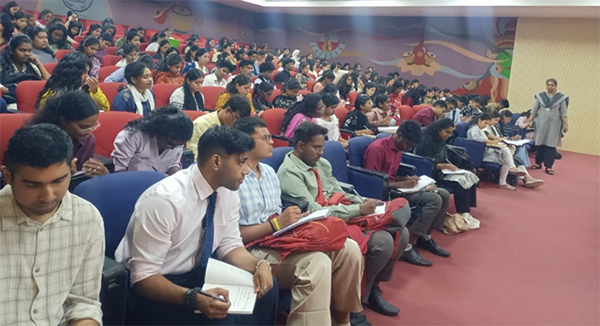
The Department of Life Sciences organized a Capacity Building Training Programme on Life Skills Education for first-year UG Life Science students of I BTGE, BTBC, MBGE, and BTBO on 24/07/2026, 27/07/2026, and 28/07/2026. The training programme focused on the ten core life skills: Introduction to Life Skills, Decision Making, Coping with Emotions, Problem Solving, Self-awareness, Effective Communication, Stress Management, Empathy, Creative Thinking, Critical Thinking, and the Application of Life Skills in Everyday Life. The sessions were designed to be highly interactive and activity-based, encouraging active student participation through games, group discussions, role plays, skits, debates, and other engaging learning activities. The programme emphasized the importance of life skills in fostering holistic personality development, enhancing emotional intelligence, promoting effective interpersonal relationships, and enabling students to make informed decisions in their personal and professional lives. These essential life skills also equip students with the competencies required to meet the challenges of higher education and future careers. Dr. Sangeetha Menon, Programme Coordinator, Department of Life Sciences, introduced the concept and significance of the ten core life skills to the students. She highlighted how these skills contribute to the overall development of individuals by nurturing self-confidence, resilience, leadership, and professional competence, thereby preparing them to become responsible and successful professionals.
Capacity Building Training on Life Skills
Date: 29 August 2025
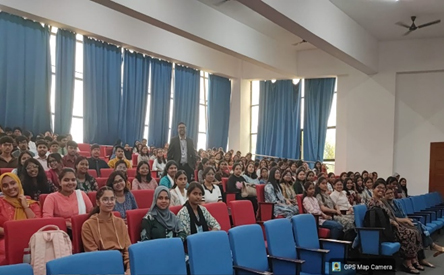
The Department of Life Sciences, in collaboration with the Centre for Life Skills Education, organized a Capacity Building Training on Life Skills from 23rd July to 29th July 2025 for first-year undergraduate students and from 25th August to 29th August 2025 for postgraduate students. A total of 345 students benefitted from the training, making it a significant step towards fostering holistic development and preparing students to face academic, professional, and personal challenges with confidence. Guided by experienced teachers, the sessions were interactive and experiential, allowing students to practice, reflect and internalize the skills in real-life contexts. Rooted in the ten core life skills identified by the World Health Organization (WHO), the sessions provided a holistic framework to strengthen self-awareness, empathy, problem-solving, and emotional resilience. Self-awareness helped students recognize and understand their emotions, strengths, weaknesses, and values, enabling them to act with clarity and confidence. Empathy fostered the ability to connect with others’ emotions, thereby strengthening interpersonal bonds. Critical thinking taught them to analyse information, evaluate situations, and make sound judgments, while creative thinking encouraged innovative solutions and new approaches to problem-solving. The sessions on decision-making and problem-solving guided students to evaluate options carefully, identify challenges, analyse root causes, and devise effective strategies for resolution. Training in effective communication emphasized clarity, persuasion, and confidence in expressing thoughts and ideas, while the focus on interpersonal relationships highlighted the importance of building and sustaining meaningful, positive connections. The modules on coping with stress and coping with emotions were particularly impactful, equipping participants with strategies to manage pressure, regulate emotions, and promote mental and emotional resilience. Together, these skills formed a comprehensive framework for preparing students to handle academic, professional and personal challenges with greater adaptability and purpose.
The outcome of the program was transformative, as students developed not only stronger self-awareness and empathy but also sharper critical and creative thinking, improved problem-solving, and enhanced communication and relationship-building abilities. They learned to navigate stress and emotions more constructively, contributing to their overall resilience and readiness for future challenges.