Research Activities
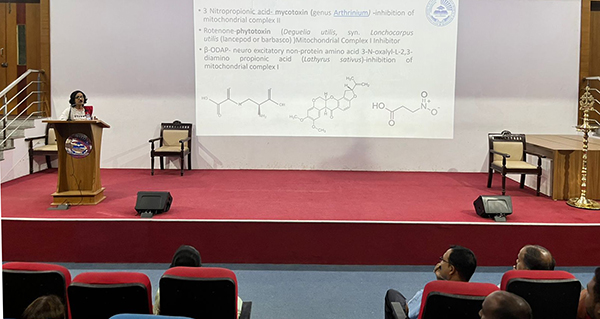
Research Empowerment Talk on “Molecular Mechanisms Associated with Arsenic and Smokeless Tobacco Exposure”
Date: 11 April 2026
The Department of Life Sciences, School of Biological and Forensic Sciences at Kristu Jayanti University organized a Research Empowerment Talk on 11 April 2026.
The session was delivered by Dr. Samrat Das.
The topic of the talk was “Molecular Mechanisms Associated with Arsenic and Smokeless Tobacco Exposure”.
The speaker explained the harmful effects of arsenic and smokeless tobacco on human health.
The talk focused on DNA damage and disruption of repair mechanisms.
It also highlighted changes in epigenetic regulation caused by these exposures.
Special emphasis was given to the synergistic effects of co-exposure.
The session explained how these factors contribute to oral carcinogenesis.
The discussion stressed the importance of preventive strategies and targeted therapies.
The talk encouraged researchers and faculty members to explore research related to regional health challenges.
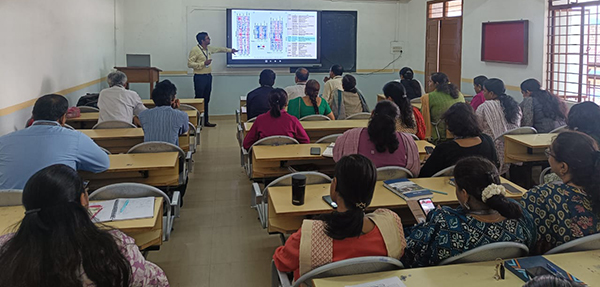
Research Empowerment Talk on ‘Ethics Involved in Animal Handling, Care and Disposal’
Date: 21 February 2026
The Department of Life Sciences, School of Biological and Forensic Sciences at Kristu Jayanti University organized its Monthly Research Day Empowerment Talk on 21st February 2026. The session was delivered by Dr. Vasundhara CCS, Assistant Professor, Department of Life Sciences, and was titled “Ethics Involved in Animal Handling, Care and Disposal.” The speaker emphasized that ethical responsibility in animal use is both a moral obligation and a scientific necessity, ensuring credibility, compassion, and sustainability in research. She discussed humane handling practices, stressing the importance of minimizing stress and pain, understanding species-specific behavior, and ensuring proper training for handlers. Ethical care was highlighted through the provision of food, water, shelter, veterinary oversight, and environmental enrichment to promote psychological well-being. The talk also addressed sensitive aspects of animal disposal, advocating for humane euthanasia methods, dignified handling of remains, and compliance with environmental and legal standards. Dr. Vasundhara introduced participants to global frameworks such as the 3Rs Principle—Replacement, Reduction, and Refinement—and the role of Institutional Animal Care and Use Committees (IACUCs) in safeguarding welfare. The session provided valuable insights into integrating ethical principles into daily research practices, motivating faculty and students to embrace interdisciplinary approaches that respect both scientific progress and animal welfare. The program successfully reinforced the institution’s dedication to nurturing a compassionate and responsible research culture.
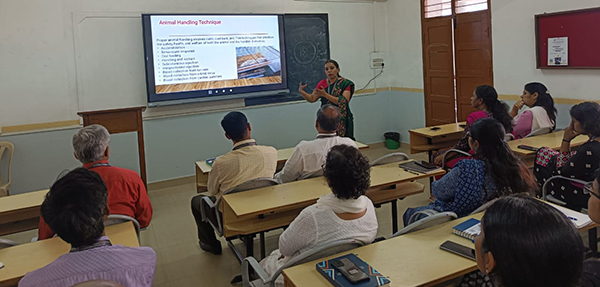
Research Empowerment Talk on “Methodologies to Study Proteostasis in Cells”
Date: 31 January 2026
The Department of Life Sciences, School of Biological and Forensic Sciences at Kristu Jayanti University organized a Research Empowerment Talk on 31 January 2026. The session was delivered by Dr. Lakshmi Garimella on the topic “Methodologies to Study Proteostasis in Cells”.
The talk focused on cellular proteostasis, protein folding, degradation mechanisms, and their role in maintaining cellular health. The speaker also highlighted advanced imaging and molecular biology techniques used to study protein dynamics and discussed the link between proteostasis imbalance, neurodegenerative diseases, and cancer. The session encouraged interdisciplinary research and scientific innovation among faculty members and students.
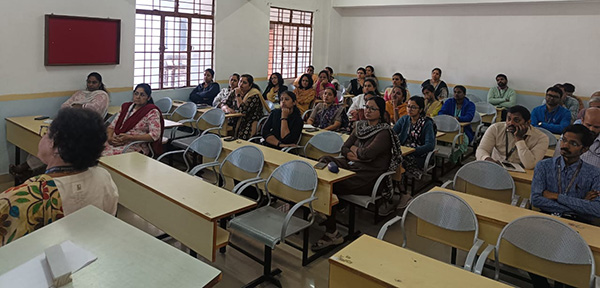
Exploring the Research Ecosystem at KJU
Date: 09 August 2025
The School of Biological and Forensic Sciences at Kristu Jayanti University organized its Monthly Research Day on 09 August 2025 with the theme “Exploring the Research Ecosystem at KJU.” The session was led by Dr. Dileep Francis, who highlighted the importance of a strong research culture, interdisciplinary collaboration, ethical practices, and quality publications in reputed journals, including SCIE-indexed journals.
The talk provided valuable insights into the university’s research facilities, opportunities, and support systems, motivating faculty members and students to engage in innovative and impactful research activities.
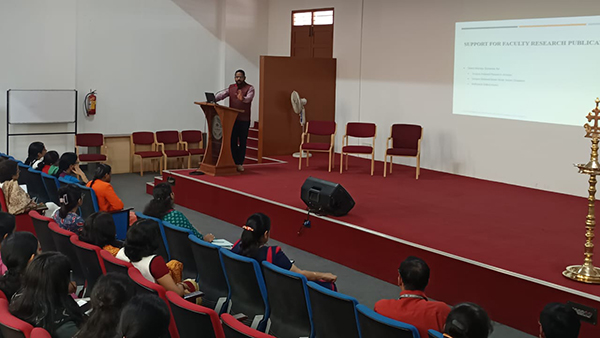
Writing A Review Paper: Crafting Scientific Narratives
Date: 06 August 2025
A special session on “Writing a Review Paper: Crafting Scientific Narratives” was conducted on 06 August 2025 for students of Biotechnology, Microbiology, and Biochemistry. The session focused on enhancing scientific writing skills and provided insights into the importance of review articles in summarizing research, identifying knowledge gaps, and suggesting future directions.
Participants were introduced to different types of review papers, standard manuscript structure, ethical citation practices, and plagiarism avoidance. The session also highlighted the use of modern tools such as Mendeley, BioRender, and Grammarly to improve academic writing and research presentation. The program successfully equipped students with essential skills for effective scientific communication and scholarly writing.
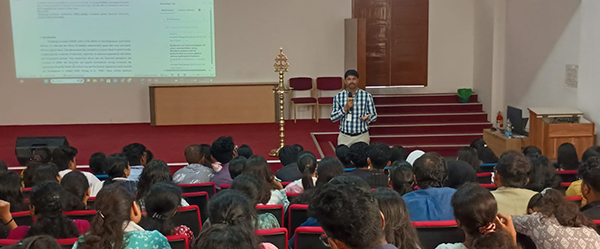
Monthly Research Day – Research Empowerment Talks
Date: 26 July 2025
The School of Biological and Forensic Sciences at Kristu Jayanti University organized its 1st Monthly Research Day on 26 July 2025 to promote research awareness and interdisciplinary learning. The session was delivered by Dr. Shinomol George K on the topic “Neurotoxicology of Mitochondria to Environmental Toxicology.”
The talk highlighted the role of mitochondria in neural health and explained how environmental toxins disrupt mitochondrial function, contributing to neurodegenerative disorders and environmental health challenges. The session provided valuable insights into emerging research areas in molecular biology, neuroscience, and environmental science, encouraging students and faculty to pursue interdisciplinary research.