Industrial Visit
Industrial Visit Rico Wine Park & Vineyard
Date: 08 April 2026
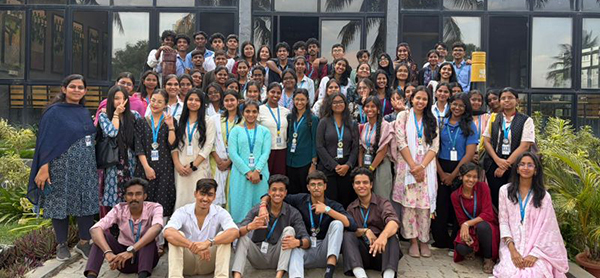
An industrial visit was organized on 8th April 2026 to Rico Wine Park and Vineyards for II Semester undergraduate students of Biotechnology, Genetics, and Biochemistry (Sections A & B), Kristu Jayanti (Deemed to be University). A total of 136 students, accompanied by Dr. Rituparna Saha, Dr. Anoja Kurian, and Ms. Sharon Mary P, participated in the visit. The objective was to provide practical exposure to vineyard management and wine production. Students learned about grape cultivation, including soil requirements, climate conditions, irrigation, pruning, and harvesting techniques. They observed the complete wine-making process, such as crushing, fermentation, aging, and bottling. Key concepts like fermentation, temperature control, hygiene, and storage were explained, highlighting their impact on wine quality. The visit also introduced different types of wines and quality control measures. Overall, the experience was informative and helped students connect theoretical knowledge with real-world applications in agro-based industries.
Industrial Visit to CFTRI, Mysore
Date: 30 March 2026
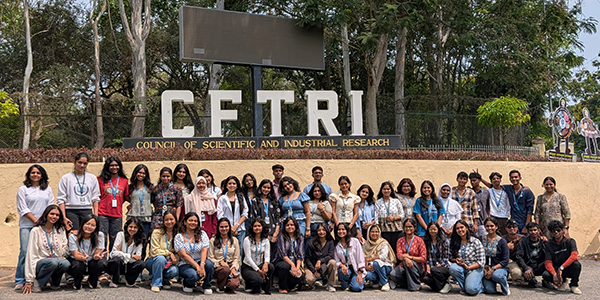
Department of Life Sciences organized an industrial visit to CFTRI, Mysore to Department of Biochemistry and Department of plant and animal cell biotechnology on 30/03/2026 for VI semester B.Sc. students from BTBC and BTBO. It was experiential learning for the students as they visited these departments. The visit enhanced the practical prospective of the students by understanding the functioning of the research labs and great opportunities to interact with industry experts.
Visit to Indo American Hybrid Seeds (India) Pvt. Ltd.
Date: 23 September 2025
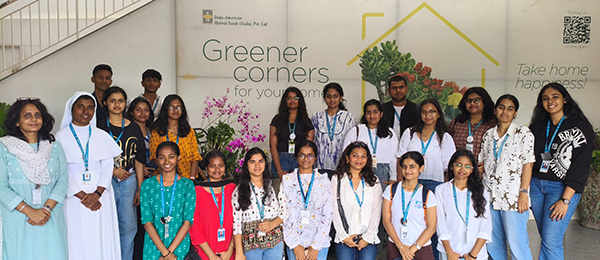
The Department of Life Sciences, Kristu Jayanti (Deemed to be University), Bengaluru, organized an enriching industrial visit to Indo American Hybrid Seeds (India) Pvt. Ltd., Bengaluru, exclusively for the III and V Semester Botany students. The visit was meticulously coordinated and accompanied by Dr. Indira, faculty member of the department, who guided the students throughout the program. The objective of the visit was to provide young learners with practical exposure to contemporary agricultural practices and to bridge the gap between theoretical knowledge and industrial applications.
During the visit, students were introduced to the processes involved in hybrid seed production, a critical area in modern agriculture that contributes significantly to crop yield, quality, and sustainability. Experts from the organization demonstrated how hybridization techniques are designed and implemented, emphasizing the crucial role of plant taxonomy in identifying and classifying parent lines. This scientific approach ensures that desirable traits such as disease resistance, higher productivity, and adaptability to environmental stress are successfully incorporated into new crop varieties. Students were able to witness firsthand how concepts learned in the classroom are practically applied in crop improvement programs.
Another major highlight of the visit was the exposure to plant tissue culture laboratories. Students gained insights into advanced techniques like micropropagation and germplasm conservation, which are indispensable in large-scale plant propagation. The demonstrations showcased how tissue culture not only supports the rapid multiplication of plants but also maintains genetic purity, eliminates diseases, and aids in the conservation of rare and endangered plant species. The interaction with technical experts allowed students to understand how biotechnology is shaping sustainable agricultural practices by ensuring consistent crop quality and availability. Beyond the technical knowledge, the visit also helped students appreciate the multidisciplinary nature of modern life sciences, where taxonomy, genetics, biotechnology, and agriculture converge to address global food security challenges. By observing professional work environments, students developed a deeper understanding of the importance of research, precision, and innovation in agriculture. The experience underscored the growing significance of biotechnological applications in meeting the demands of an ever-increasing population while safeguarding biodiversity.
Overall, the industrial visit to Indo American Hybrid Seeds (India) Pvt. Ltd. proved to be an educational and inspiring experience. It not only enriched students’ academic learning but also broadened their perspective on career opportunities in agriculture and biotechnology. Such initiatives by the Department of Life Sciences, Kristu Jayanti (Deemed to be University), reflects its commitment to providing holistic education that combines theory with practice, thereby nurturing future scientists and professionals who can contribute meaningfully to the advancement of applied botany and sustainable agriculture.