Internships and Certificate courses
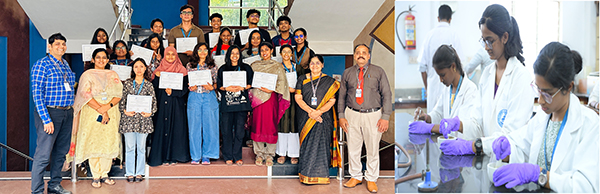
Certificate Course on CRISPR: Exploring Gene Editing and Rapid Diagnostics with Field Applications
Date: 22nd, 23rd, 29th and 30th August, 2026
The Department of Life Sciences, School of Biological and Forensic Sciences, Kristu Jayanti Deemed to be University, in association with Cascore Biotech Pvt. Ltd., organized a certificate course titled “CRISPR: Exploring Gene Editing and Rapid Diagnostics with Field Applications” on 22nd, 23rd, 29th and 30th September 2026 at the PG Microbiology Laboratory, 3rd Floor, Science Block, Central Campus, from 9:00 AM to 5:00 PM.
The course was designed to provide participants with a comprehensive introduction to the principles and applications of CRISPR technology, with particular emphasis on gene editing and rapid molecular diagnostics. The sessions covered the fundamentals of CRISPR-Cas systems, their applications in biotechnology and healthcare, and emerging developments in the field.
The programme incorporated interactive lectures, demonstrations, and hands-on practical sessions, enabling participants to connect theoretical concepts with laboratory applications. The practical exposure helped students develop a better understanding of CRISPR-based techniques and their potential applications in research, diagnostics, and field settings.
The certificate course provided a valuable opportunity for students to enhance their technical knowledge, laboratory skills, and understanding of emerging gene-editing and diagnostic technologies. The programme also encouraged participants to explore the growing applications of CRISPR in modern biotechnology and life sciences.
Summer Internship in Limnetic Microbiology
Date: June 10 to 10 July 2026
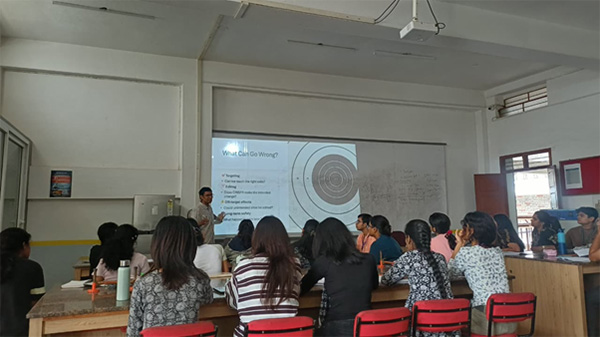
The School of Biological and Forensic Sciences, Department of Life Sciences, Bio-Skills Studio, Kristu Jayanti (Deemed to be University), Bengaluru, successfully organized a 30-day Summer Internship in Limnetic Microbiology from 10 June to 10 July 2026 at the PG Microbiology Laboratory. The internship brought together 30 interns from leading institutions across India, including the National Institute of Technology (NIT), Vellore Institute of Technology (VIT), B. S. Abdur Rahman Crescent Institute of Science and Technology, Rajalakshmi Engineering College, St. Joseph's College (Autonomous), and Kristu Jayanti (Deemed to be University). Designed to provide an immersive research experience in freshwater microbial ecology, the program combined extensive field investigations with advanced laboratory techniques, molecular biology, bioinformatics, and artificial intelligence.
Participants conducted lake water sampling from freshwater ecosystems in Bengaluru and investigated the diversity of microalgae, bacteria, and fungi through morphological, biochemical, and molecular characterization. The internship offered comprehensive hands-on training in microbial isolation, identification, and ecological analysis, while exposing interns to modern computational approaches, including bioinformatics analysis, phylogenetic reconstruction, and Artificial Intelligence-assisted microbial taxonomy. As part of the molecular characterization workflow, interns performed genomic DNA extraction, PCR amplification, DNA sequencing, and sequence analysis, culminating in the successful publication of 220 nucleotide sequences representing the 16S rRNA gene, 18S rRNA gene, and Internal Transcribed Spacer (ITS) region in the NCBI GenBank database.
The internship also emphasized microbial prospecting for industrial and environmental applications. Participants screened the isolated microorganisms for bacterial pigment production, heavy metal resistance, antibiotic resistance, hydrocarbon degradation, enzyme production, and biosynthesis of nanoparticles. Fungal isolates were additionally evaluated for the production of antimicrobial metabolites (fungal antibiotics), providing interns with exposure to the discovery of bioactive compounds from freshwater microorganisms. By integrating field limnology, molecular microbiology, microbial biotechnology, bioinformatics, artificial intelligence, and translational research, the internship equipped participants with industry-relevant skills and practical research experience aligned with contemporary advances in environmental microbiology and microbial biotechnology.
Internship Programme on Fermentation and Enzyme Technology
Date: June 15 to 03 July 2026
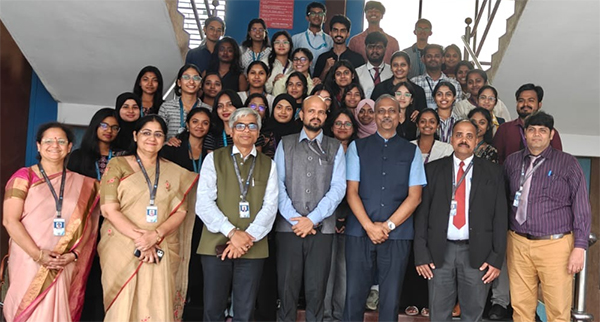
The Department of Life Sciences, School of Biological and Forensic Sciences, organized a comprehensive internship programme on Fermentation and Enzyme Technology under the aegis of Bioskill Studio, held from June 15th to July 3rd, 2026. The programme brought together both internal and external participants, offering them an immersive hands-on learning experience in the field of microbial fermentation and enzyme technology. The programme commenced with an inaugural session on June 15th, graced by Dr. Priya Josson, Head, Department of Life Sciences, who felicitated the participants and set the tone for the intensive training ahead. The event was coordinated by Dr. Esther Shoba, Internship Coordinator, whose guidance shaped the structured and skill-oriented approach of the entire programme. Over the course of the internship, participants were trained in the complete workflow of fermentation-based enzyme production. The training began with the isolation of bacteria, followed by detailed morphological, biochemical, and molecular characterization of each isolate, carried out individually by every participant. This was followed by an in-depth exploration of enzyme production, where participants performed both qualitative and quantitative assessments to identify and maximize enzyme yield from their respective bacterial isolates. A key highlight of the programme was the training on media optimization using Design-Expert (DoE) software, enabling participants to statistically design and optimize fermentation media for enhanced enzymatic production — a skill of significant value in industrial biotechnology. Participants further gained expertise in enzyme purification techniques, including dialysis and chromatographic methods, rounding off their understanding of the complete enzyme production pipeline from isolation to purification. Towards the culmination of the programme, participants were entrusted with the responsibility of independently handling microbial cultures and optimizing fermentation conditions, reinforcing their practical competence and confidence in laboratory-scale bioprocessing. This internship not only strengthened the participants' technical and analytical skills but also opened avenues for their entry into the pharmaceutical and food industries, equipping them with industry-relevant expertise crucial for their future career growth in biotechnology and applied life sciences.
Summer Internship - From Gene to Protein: Practical Internship in Molecular Techniques
Date: 22 June to 09 July 2026
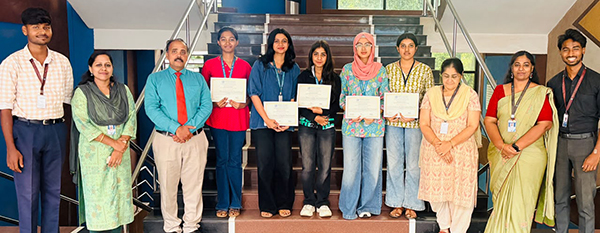
The Department of Life Sciences organised Summer Internship on “From Gene to Protein: Practical Internship in Molecular Techniques” for Life Science students from 22nd June to 9th July 2026. The emphasis of the internship programme was to inculcate hands on skills in Molecular Biology techniques. Internship provided extensive hands-on experience in basic and advanced molecular biology protocols. During the course of fifteen days, students learnt the necessary laboratory protocols from media preparation and culturing of Drosophila melanogaster through DNA isolation from plant tissue, animal tissue, insect and cell line. Methods such as agarose gel electrophoresis and spectrophotometric analysis reinforced the knowledge of DNA characterization and quantification. Students also learned how to design and analyze primers through bioinformatics tools, and effectively carried out PCR reaction setups and amplifications. Toward the later phases, students were exposed to protein separation with SDS-PAGE, followed by Western blotting and immune detection methods, which showcased protein analysis techniques. This internship significantly improved the technical competence, critical thinking, and research readiness, providing a solid basis for prospective academic and research work in molecular biology.
Summer Internship - DNA Barcoding and Molecular Phylogeny
Date: 15 to 30 June 2026
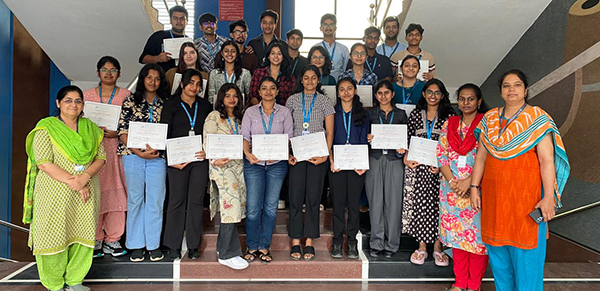
The Department of Life Sciences, as part of its BioSkills Studio initiative, successfully organized a Summer Internship in DNA Barcoding and Molecular Phylogeny from 15 June 2026 to 30 June 2026, held from 9:00 a.m. to 4:00 p.m., for II and III year Life Science students. The internship was attended by 17 students and was conducted by Dr. Anoja Kurian, Assistant Professor, and Dr. Gurunathan S., Associate Professor. The programme provided participants with a strong foundation in molecular identification techniques and phylogenetic analysis through intensive hands-on training in DNA isolation, PCR amplification, and agarose gel electrophoresis. Students also gained practical experience in primer designing using Primer3, sequence editing with BioEdit, BLAST analysis, and molecular phylogenetic tree construction using MEGA software. In addition, participants were introduced to GenBank sequence submission, barcoding gap analysis, and the BOLD database for DNA-based species identification. The internship effectively integrated wet-lab techniques with bioinformatics tools, enabling students to develop practical laboratory skills, computational proficiency, and a deeper understanding of molecular taxonomy and evolutionary biology. The programme successfully enhanced the research competencies offor the participants and prepared them for advanced studies and careers in molecular biology, biotechnology, and biodiversity research. Certificates were distributed to all participants in recognition of their successful completion of the internship.