Juvenile Delinquency in India
 |
Tejashwini LJ, 25FCBB56, BSc III Semester, Department of Forensic Science, Kristu Jayanti (Deemed to be University), Bengaluru, India |
Juvenile delinquency generally refers to unlawful or antisocial behaviour committed by children or adolescents. In the Indian legal context, the Juvenile Justice (Care and Protection of Children) Act, 2015 uses the term “child in conflict with law” for a child who is alleged or found to have committed an offence.
Juvenile delinquency is an important social concern because behaviour during childhood and adolescence can be influenced by family circumstances, education, peer relationships, economic conditions, substance use, and the wider social environment. While some cases may involve relatively minor offences such as theft, vandalism, or property-related offences, some children may become involved in more serious offences.
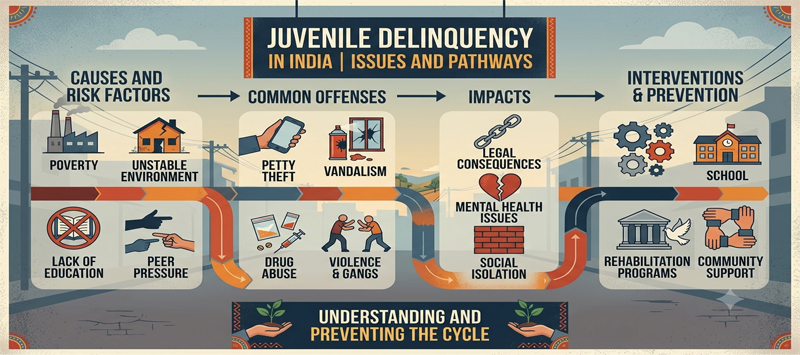
Major Causes of Juvenile Delinquency
Juvenile delinquency rarely has a single cause. It may develop through a combination of personal, family, social, and economic factors.
1. Family Problems
Family conflict, neglect, domestic violence, inadequate parental supervision, separation, and lack of emotional support can negatively affect a child's development. Children who do not receive appropriate guidance and care may become more vulnerable to harmful peer influences.
2. Poverty and Economic Disadvantage
Economic hardship can limit access to education, healthcare, recreational opportunities, and other essential resources. In some circumstances, children may become involved in theft, exploitation, or other unlawful activities as a result of difficult living conditions.
3. Peer Pressure
Peer groups can strongly influence behaviour during adolescence. Children may participate in risky or unlawful activities because of pressure to gain acceptance, demonstrate loyalty, or establish their identity within a group.
4. Substance Abuse
Exposure to alcohol, drugs, and other harmful substances can increase vulnerability to risky behaviour. Substance use may also place children in contact with individuals or environments associated with criminal activities.
5. Social Media and Digital Influence
The widespread use of social media has created new opportunities for communication and learning, but it can also expose young people to harmful content, online exploitation, cyberbullying, violent material, and negative peer influences. Digital platforms can therefore become an additional factor requiring parental and educational awareness.
6. Lack of Education and Positive Opportunities
School dropout, poor academic support, limited vocational opportunities, and lack of constructive recreational activities can increase vulnerability to delinquent behaviour. Education can provide not only knowledge but also social skills, discipline, confidence, and opportunities for positive development.
Juvenile Justice Framework in India
India's approach to children who come into conflict with the law is primarily guided by the Juvenile Justice (Care and Protection of Children) Act, 2015.
The framework places considerable emphasis on care, protection, rehabilitation, development, and social reintegration. The objective is not simply to punish a child but to address the circumstances that may have contributed to the behaviour and help the child return to a constructive path.
The juvenile justice system includes institutions and mechanisms such as Juvenile Justice Boards, observation homes, special homes, and other child-care and rehabilitation services. These mechanisms are intended to provide appropriate care, supervision, education, counseling, and rehabilitation, subject to the nature of the case and applicable law.
Prevention of Juvenile Delinquency
Preventing juvenile delinquency requires cooperation among families, educational institutions, communities, law-enforcement agencies, and government organisations.
Some important preventive measures include:
- Providing accessible and quality education.
- Strengthening parental guidance and supervision.
- Providing emotional and psychological support to children.
- Developing life skills and decision-making abilities.
- Creating opportunities for sports, arts, and constructive recreation.
- Increasing awareness about substance abuse and its consequences.
- Protecting children from abuse, exploitation, and online risks.
- Providing vocational and skill-development opportunities.
- Identifying children at risk at an early stage and providing appropriate support.
- Promoting community-based rehabilitation and social reintegration.
Juvenile delinquency is not merely a criminal justice issue; it is also a social, educational, psychological, and developmental concern. Children who engage in unlawful behaviour may have experienced neglect, abuse, poverty, poor supervision, peer pressure, or other difficult circumstances.
India's juvenile justice framework therefore emphasises a balance between accountability, child protection, rehabilitation, and reintegration. Effective prevention requires more than responding after an offence has occurred. Families, schools, communities, and government institutions must work together to provide children with education, guidance, emotional support, protection, and meaningful opportunities.
By addressing the underlying causes of delinquent behaviour and supporting children in making positive choices, society can help prevent repeated offending and enable young people to develop into responsible and productive citizens.